|
Outside-the-box
Aspirations - benefits, approaches, examples
Outside-the-box
Aspirations
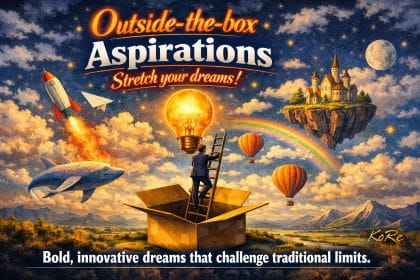 
'Outside the box aspirations' refer to bold, innovative
dreams that challenge traditional limits - whether in
life design, career growth, personal development, or
problem-solving. Such aspirations encourage stepping
beyond comfort zones, embracing risk, and pursuing
unique solutions.
For example, reimagining a career path or finding novel
ways to achieve success can lead to breakthrough
outcomes. This mindset fosters innovation, adaptability,
and long-term impact.
--Outside-the-box aspirations involve setting
unconventional, creative goals that challenge the status
quo, breaking free from self-imposed limitations, and
fostering personal growth. These goals focus on unique
career paths, learning entirely new skills, or
cultivating a passion for creative problem-solving and
greater fulfillment. Key approaches include thinking
from a new perspective, taking calculated risks, and
questioning established norms.
Benefits
Thinking in this manner boosts confidence, increases
happiness through personal growth, and leads to better,
more innovative solutions.
Key Components of Outside-the-Box Aspirations
Challenge Assumptions: Questioning norms, hierarchies,
and long-held beliefs to see new opportunities.
Thinking outside the box:
Approaching goals or challenges with creativity and
unconventional ideas.
Embrace Creativity: Proposing unique, non-obvious
solutions and brainstorming unconventional paths.
Cultivate Curiosity: Committing to lifelong learning and
exploring topics outside your core expertise.
Leverage Resources Differently: Implementing current
skills or tools in new ways (e.g., using a ladder for
something other than climbing).
Take Risks: Embracing the possibility of failure as a
learning opportunity to achieve significant growth.

Examples of Outside-the-Box Goals
Redefining Career Success: Instead of a linear promotion
path, creating a "portfolio career" combining unrelated
passions (e.g., tech consultant by day, artist by
night).
Unconventional Learning: Mastering a completely
unrelated skill, such as a developer taking up pottery
to foster creative thinking, or learning a rare
language.
Problem-Solving: Applying techniques from different
fields (e.g., using theater techniques to improve
corporate presentation skills).
Radical Life Changes: Setting goals like moving to a new
country for a year, starting a non-profit, or taking a
sabbatical for deep research.
|