|
Contents
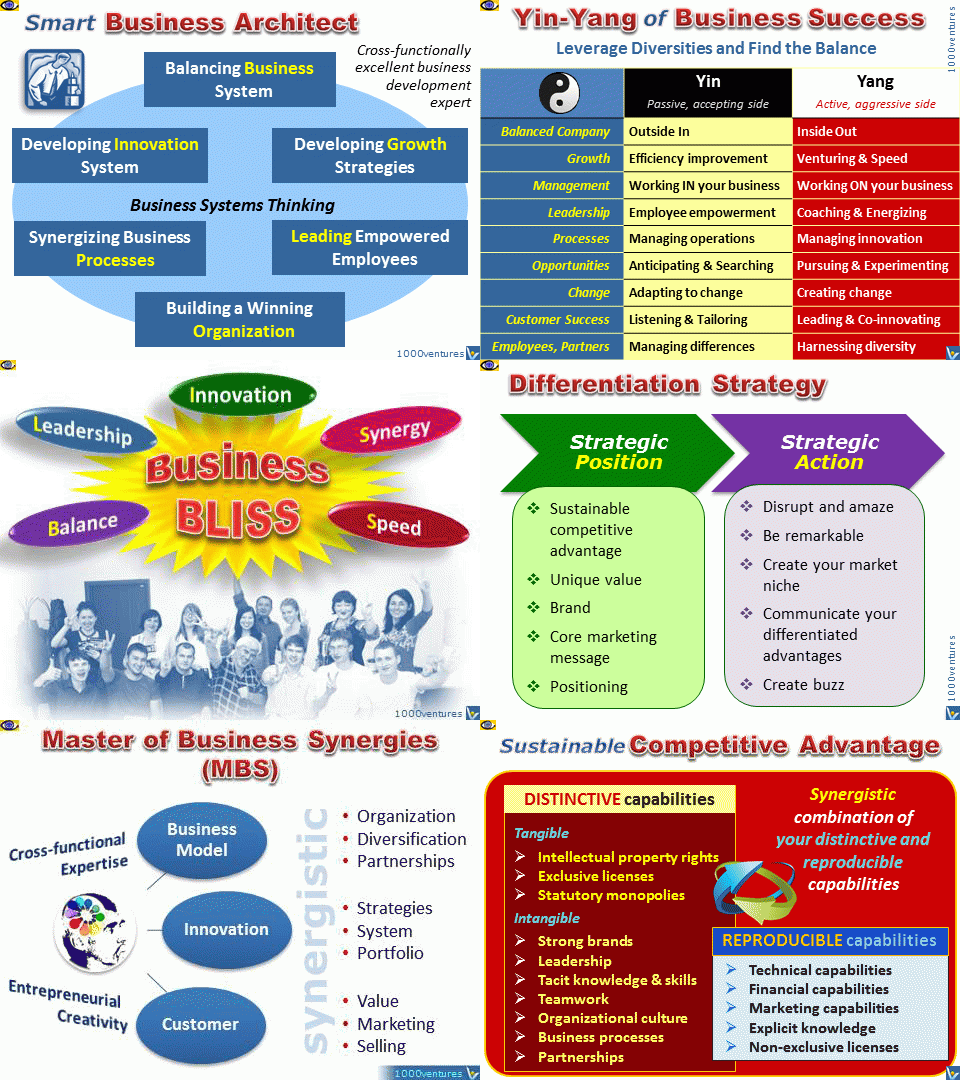
1. Business Architect: Core Tasks and Skills
The Tree of Business
See
the slide
Inclusive Company
Rapidly Changing Global Scenario
See
the slide
Intellectual Assets – the Major Value
Driver in the Modern Economy
Discovering and Building Synergies
Business Architect: Cross-functionally
Excellent Business Development Expert
Business Architect: Cross-functional
Expertise Requirements
Building Your Cross-functional
Excellence
Systems Thinking
Process Thinking
80/20 Strategic Thinking
Asking Searching Questions
Creative Problem Solving (CPS)
Techniques
Techniques to Develop Creative
Solutions: The Flow of Ideas
Leading Change: 8-Step Process
Making Effective Presentations
Effective Negotiating
2.
Balancing Your Business System
Generic Components of a Healthy Company
Success Story:
GE – Creating the World's Most Competitive
Enterprise
See
the slide
Business Model: 6+1 Components
See
the slide
Business BLISS: Balance, Leadership,
Innovation, Synergy, Speed
Balanced Business System
See
the slide
Balancing Dynamic Organizational
Dichotomies
Balancing Outside-In and Inside-Out
Strategies
The Tao of Effective Management
Management by Consciousness
The Tao of Business Success
See
the slide
8 Best Practices of Successful
Companies
Discovering Synergies
The Tao of Customer Value Creation
See
the slide
Success Story:
Amazon.com – Creating Customer Value and Competitive Advantage
Building an Effective Value Chain
Leveraging Your Service-Profit Chain
Extended Enterprise
Core Competences
Strategic Alliances
Business Process Outsourcing (BPO)
Virtual Integration: 3 Action Areas
Customer Partnership
Best
Practices:
Building Successful Business: 10 Rules from Sam Walt
3.
Developing Sustainable Growth
Strategies
Corporate Vision
See
the slide
Building a High-Growth Business: Tasks
at Different Stages
Three Hierarchical Levels of Strategy
Strategy Pyramid vs. Strategy Stretch
See
the slide
Choosing Between Strategy and
Opportunity Approach
What Is More Important: Plan or
Planning?
Business Evolution and Growth
Strategies
GE Multifactor Business Portfolio
Matrix
Success Story: Bunsha – Growing
Business through Spinouts
Corporate Growth Strategies
Resource-based Model of Above-average
Returns
Corporate Capabilities
Three Levels of Business Intelligence
System
Achieving Bottom-line Results and
Top-line Growth
Blue Ocean
Strategy vs. Red Ocean Strategy
Competitive Strategies
See
the slide
Lessons
from Jack Welch: Strategic Analysis – 5 Questions To Answer
Sustainable Competitive Advantage: 5 Criteria
Sustainable Competitive Advantage:
Resource-based View
Sustainable Competitive Advantage: A Synergy of Capabilities
See
the slide
Owning Your Competitive Advantage
Strategic Brand Management
Customer-focused Strategies
See
the slide
Customer Intimacy
Lessons from Dell Computers: Segmentation by Customer
Internal and External Ventures
Success
Story:
Spinouts of Thermo Electron Corporation
Success
Story: In-company Ventures
by Corning
Success
Story: Corporate Venture
Investing by GE Equity
4. Leading Empowered Employees and Orchestrating Talents
Effective Leadership: Attributes
× Results
25 Lessons from Jack Welch
Lessons from Jack Welch:
Involve Everybody
Building a Team Culture
Lessons from Jack Welch:
Make Everyone a Team Player
Managing Knowledge Workers
Lessons from Jack Welch:
Articulate Your Vision
Lessons from Dell: Mobilize Your
People Around a Single Goal
Lessons from Jack Welch: Stretch
See
the slide
Energizing Employees
Lessons
from Jack Welch: Make
Business Fun
Lessons from Jack Welch: See
Change As an Opportunity
5.
Building a
Winning Organization
Shift from Industrial to
Knowledge-driven Organization
9 Signs of a Loosing Organization
See
the slide
Yin and Yang of a Winning Organization
See
the slide
Best Practices:
Matsushita 7 Core Principles of Management Philosophy
See
the slide
Organizational Fitness Profile (OFP)
Managing Organizational Change: The
Wheel of Business Evolution
Building
Top
Management Team
Adaptive Organization
Inspiring Culture
See
the slide
Success Story: British Petroleum
Entrepreneurial Organization
Innovation-friendly Organization
See
the slide
Lessons
from Jack Welch:
Eliminate Boundaries
7Ss Model
Lessons from Jack Welch:
Put Values First
See
the slide
Shared Values
New
Company-Employee Partnership
Employee Satisfaction
Employee Empowerment: 3 Levels
Flat Organization: Divisional Structure
Success Story:
British Petroleum
– a Federation of 100 Business Units
Harnessing the Power of Diversity:
Creating Cross-Functional Teams
Best Practices: Silicon Valley
– Sharing Gain With Employees
Best Practices: Pre-IPO Company
Ownership
The
Wheel of Knowledge Management: 5 Sectors
Best Practices: Knowledge
Management at British Petroleum (BP)
Leveraging Diversity
Coaching Organization
Coaching Culture
Fast Company
Lessons from Jack Welch: Live
Speed
Lessons from Jack Welch:
Simplify
Best
Practices: Charles Schwab – Establishing Corporate Guiding
Principles
Lessons from Jack Welch:
Get Rid of Bureaucracy
Lessons from Dell: Developing
the Fast-paced Flexible Culture
Lessons from Jack Welch: Behave
Like a Small Company
Lessons from Jack Welch:
Cultivate Leaders
Best
Practices: Leadership
Development at GE
6. Synergizing Processes, Efficiency and Quality Improvement
The Tao of Business Process Innovation
Process Management: Shift to
Cross-Functional Paradigm
The Payoffs of Process Approach to
Business
Process Thinking
8 Essential Principles of EBPM
Cross-functional Management (CFM)
Aligning Information Technology (IT)
and Business
Selecting the Right IT Architect: 11
Traits of a True IT Leader
Continuous Improvement Firm (CIF)
Lean Production – Doing More With Less
Integrating Six Sigma With Business
Process Management
Different TQM Practices in Japan and
the West
Deming's 14 Point Plan for Total
Quality Management (TQM)
7. Developing Corporate Innovation System
Lessons from Jack Welch:
Constantly Focus on Innovation
Sustainable Innovation – The Key To
Survival and Success
The Tao of Value Innovation
See
the slide
Managing Operations vs. Managing
Innovation
Systemic Approach to Innovation: 7
Interwoven Areas
See
the slide
Managing Innovation by Cross-functional
Teams
Corporate Innovation System: 5+1
Components
Strategic Alignment
The Tao of Intellectual
Cross-pollination
Best
Practices: Characteristics of Most Successful
Companies
Product Innovation: New Product Types
Radical versus Incremental Innovation
Best Practices:
Using Innovation
Portfolio by Silicon Valley Companies
The Jazz of Innovation: Creative Chaos
Within a Structure
See
the slide
The Jazz of Innovation: Key Elements
Intellectual Property Management (IPM)
Innovation Process: Modern Business
Synergies Approach
Best
Practices: Attributes of
Effective Innovation in Silicon Valley
Measuring Innovation: Benefits, Role,
and Practices
Creating a Relentless Growth Attitude:
5 Guiding Principles
|
Sample Ten3 SMART Lessons
(Slide + Executive Summary)

Why Business
Architect?
In today's knowledge- and
innovation-driven complex economy, business architects are in
growing demand. They are cross-functionally excellent people who can
tie several silos of business development expertise together, create
synergies, design winning business model and a balanced business
system and then lead people who will put their plans into action.
Business Architect
Defined
Business architect is a person that
initiates new business ventures or leads business innovation,
designs a winning business model, and builds a sustainable balanced
business system for a lasting success.
Business architects can be found in a multitude of business
settings: corporate change leaders, initiators of joint ventures,
managers of radical innovation projects, in-company ventures,
spin-outs, or new start-up ventures. Although the settings in which
business architects act are different, they all design and run a new
venture to achieve its sustainable growth.
Integrated Approach
to the Management Process
The integrated business systems
approach to business development and the management process is what
distinguishes modern cross-functionally excellent business
architects from functional managers. As a business architect and an
extremely effective leader, you must have a broad view to be able to
link together – synergistically! – the key components of corporate
success – from functional planning to cross-functional cooperation,
from supply chain management to customer value creation, from the
art of continuous learning to the practice of effective
communication and influencing people – and bundle them in an
intellectual, innovative and pragmatic package that can be used to
achieve sustainable competitive advantage and business growth, both
top-line and bottom-line.
Inclusive Approach
At the heart of the inclusive approach
is the belief that understanding stakeholder needs – the needs of
customers, employees, suppliers, shareholders and society, and the
environment – and incorporating them into enterprise strategy and
sustainable value creation activities are central to the achievement
of sustainable growth and competitiveness.

Why Do You Need
Cross-Functional Excellence?
Although innovation is driven by
technology, required competence extends beyond technical know-how.
In the new knowledge economy and knowledge-based enterprises,
systemic innovative solutions arise from complex interactions
between many individuals, organizations and environmental factors.
The boundaries between products and services fade rapidly too. If
you wish to be a market leader today, you must be able to integrate
in a balanced way different types of know-how that would transform
stand-alone technologies, products and services into a seamless,
value-rich solution.
Learn Playing More
Than One Note
If you learn not one, but the whole
spectrum of notes, you will not have to play mono-tone music all the
time. Your will discover much more opportunities and, by engaging
your lateral thinking, self-motivation, and systems thinking arts
and skills, create great symphonies and improvise whenever
necessary. You’ll know how to transform stand-alone ideas,
technologies, products and services into value-rich solutions.
Managing Knowledge
The explosion of knowledge growth,
combined with its rapid distribution, makes it difficult to stay on
top of the available knowledge in any industry. Thus, a global
knowledge economy rewards not only creators of new knowledge but
also those who can identify and integrate knowledge effectively.
Case in Point:
Nurturing Cross-Functional Experts at Hewlett-Packard
Most companies tend to recruit, train
and promote people within functional corridors. But Hewlett-Packard
(HP) breaks the walls, creating a carrier network that begins with
the recruitment of diverse people in terms of their skills and
personality and then promotes horizontally, as well as vertically
throughout the company. Typically, HP employees move through four to
six functional areas in the course of their carriers. This creates
broad knowledge of the company and fosters the kind of teamwork
other companies covet. When it comes time to promote, managers don't
look who is next down the carrier line, they look for the best
people. Neither employees should follow a pre-defined path to a
particular post, nor need they to get a bigger title to be given new
responsibility.

Achieving Strategy
through Balancing Competing Values
The primary goal of any business is to
increase stakeholder value. It is achieved through a dynamic
balancing of competing values. In order for a business to maximize
economic value, it must balance customer satisfaction and
competitive market forces with internal cost and growth
consideration.
What is Business
Systems Approach?
A business is more than finance.
Organizations prosper by achieving strategy that is implemented as a
result of continuous decision-making at all levels of the business.
Performance measures need to be aligned with the organization's
strategy. The Business Systems approach considers business as system
of interrelated factors of strategy, owners, investors, management,
workers, finance, processes, products, suppliers, customers, and
competitors.
Balancing the Four
Perspectives
Firms implement strategy through
balancing the four major factors or perspectives:
-
Financial perspective:
To succeed financially, how should we look to our shareholders?
-
Customer perspective:
To achieve our vision, how should we appear to our customers?
-
Internal business process
perspective: To satisfy our shareholders and customers,
what business processes must we excel at?
-
Learning, innovation, and
growth perspective: To achieve our vision, how will we
sustain our ability to create value and improve?
The four perspectives permit a balance
between short-term and long-term objectives, between outcomes
desired and the performance drivers of those outcomes, and between
hard objective measures and soft subjective measures.
For each of the above four questions,
provide answers in terms of:
-
Objectives
-
Measures
-
Targets, and
-
Initiatives
... and
much, much more! |