| |
|
A
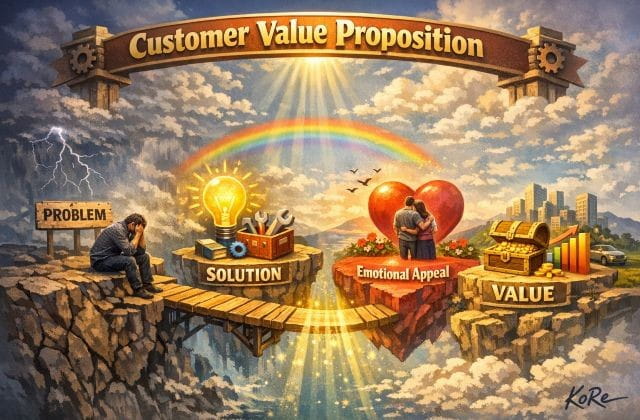
customer value proposition
clearly communicates the unique
benefits a product or service
offers to customers, answering
why they should choose it over
alternatives.
|
|
|
| |
|
A
customer value proposition
clearly communicates the unique
benefits a product or service
offers to customers, answering
why they should choose it over
alternatives.
|
|
|
It focuses on
solving a specific problem or fulfilling a need more
effectively than competitors. A strong value proposition
is concise, customer-centric, and highlights tangible
outcomes such as time savings, cost reduction, or
improved performance. It serves as a foundation for
marketing strategies, sales messaging, and brand
positioning.
AI Overview
A value proposition is a clear, concise statement
summarizing why a customer should choose your product or
service, highlighting unique benefits and
differentiating you from competitors. It directly
addresses customer pain points, offering a compelling
reason to buy. It is essential for converting leads and
clarifying brand strategy.
Key Components of a Value Proposition:
Relevance: Explains how your product solves customers'
problems or improves their situation.
Quantified Value: Delivers specific, tangible benefits
(e.g., time saved, money earned).
Differentiation: Tells the customer why they should buy
from you instead of the competition.
How to Create One:
Identify Customer Benefits: Focus on what the customer
gains, not just product features.
Define Your Unique Value (UVP): Highlight what makes you
different.
Draft a Concise Statement: Keep it short and easy to
understand.
Test and Refine: Ensure it resonates with your target
audience.
Examples:

Slack: "Make work life simpler, more pleasant and more
productive".
Uber: "The smartest way to get around".
A well-crafted value proposition should be the first
thing visitors see on a website, often appearing in the
headline, sub-headline, or bullet points.
|