| |
|
Love of humanity in action
|
|
|
Philanthropy - love of
humanity in action: value, forms, examples

Philanthropy is a form of
altruism that consists of private initiatives for the
public good, focusing on quality of life.
Philanthropies are passionate individuals and
organizations thet focus their contributions on
long-term societal improvements, such as education,
inpowerment, healthcare, or arts.
Philanthropy is the practice of giving time, money, or
resources to support charitable causes and improve
societal well-being. It emphasizes altruism and a
commitment to enhancing quality of life through private
initiatives that benefit the public. Often associated
with large donations, philanthropy also includes efforts
aimed at promoting human welfare and addressing systemic
issues.
Philanthropy is the altruistic, private initiative for
the public good, focusing on enhancing quality of life
through the donation of "time, talent, and treasure".
Rooted in the Greek word for "love of humanity," it
involves long-term, strategic efforts to improve welfare
and address underlying societal causes, often
distinguished from immediate, short-term charity.
Key Aspects of Philanthropy
Definition: It is defined as a form of altruism, or
private initiatives aimed at public good and enhancing
the quality of life.
Forms of Giving: It includes
donating money, property, or
time (volunteering) to
support causes like
education, inpowerment,
healthcare, and social
services.
"Time, Talent, and Treasure": Philanthropy is not only
about money; it involves using professional skills
(talent) or personal time to assist nonprofits and
charities.
Philanthropy vs. Charity: While often used
interchangeably, charity often provides short-term
relief, whereas philanthropy focuses on solving root
causes of problems.
Modern Philanthropy
Types: It includes personal philanthropy (individuals),
corporate giving (businesses), and foundation funding.
Modern Examples: Prominent examples include large-scale
donations from figures like Bill Gates, Naryana Murthy,
Jack Ma, and Mark Zuckerberg.
Common Causes: Donations often go toward education,
health, and addressing social inequalities.
Vehicles for Giving: Donors often use vehicles like
donor-advised funds (DAFs) to manage their charitable
giving strategically.
Benefits and Impact
Social Good: It plays a significant role in supporting
societal institutions like education, hospitals, and the
arts.
Personal Impact: Beyond helping beneficiaries, it offers
health benefits for donors and provides a sense of
purpose.
Filling Gaps: Philanthropy often fills gaps where
government or corporate sectors do not operate, aiming
for long-term, systemic change.
***
Key Aspects of Philanthropists
"Time, Talent, and Treasure": Modern philanthropists
often go beyond financial giving, offering expertise and
time to create lasting change.
Targeted Giving: Philanthropy is often focused on
specific, strategic areas to maximize impact.
Proactive Impact: Rather than just alleviating symptoms
of poverty, many focus on solving structural problems.
***
Vadim Kotelnikov is not primarily known as a
philanthropist, but rather as an innopreneur, speaker,
and innovation expert. His mission centers on thropist
is an individual who actively promotes human welfare by
donating money, time, experience, or talent to support
causes and improve the lives of others. Deriving from
the Greek for "linspiring global creativity, fostering
value innovation, and empowering individuals to become
super-creative contributors. While he promotes
transformative change and supports innovative
initiatives, these efforts are tied to innovation
ecosystems rather than traditional philanthropy. His
impact lies in driving systemic creativity and personal
development, aligning with social innovation more than
direct charitable giving.
***
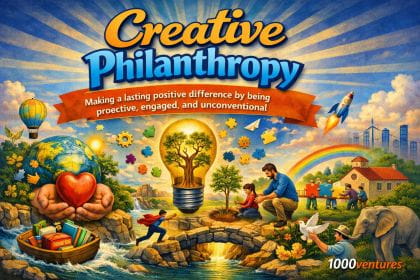
Creative philanthropy
refers to innovative and strategic approaches to giving
that go beyond traditional donations.
Creative philanthropy aims to make a lasting positive
difference by being proactive, engaged, and
unconventional.
It emphasizes impact, collaboration, and long-term
sustainability, often integrating social, cultural, and
economic dimensions. Rooted in diverse global
perspectives - such as Innompic Planet of Loving
Creators - it encourages philanthropists, foundations
and donors to think creatively about how resources can
be leveraged for transformative change. This approach
fosters innovative and adaptive models that respond to
complex societal challenges with imagination and
accountability.
Creative philanthropy is an innovative approach where
foundations act as catalysts, spotting new solutions to
social problems, taking risks, and fostering long-term
change beyond just traditional grantmaking. It focuses
on utilizing unique insights and expertise to drive
systemic improvements rather than merely providing
one-off donations.
Creative philanthropy is an innovative approach where
foundations act as catalysts, spotting new solutions to
social problems, taking risks, and fostering long-term
change beyond just traditional grantmaking. It focuses
on utilizing unique insights and expertise to drive
systemic improvements rather than merely providing
one-off donations.
Key Principles and Approaches
Innovate & Catalyst: Creative philanthropy focuses on
identifying innovative solutions and facilitating their
implementation.
Risk-Taking: These foundations act as "risk capital,"
supporting projects that may be unproven but have high
potential for positive impact.
Deep Expertise: Rather than spreading resources thin,
creative philanthropists often go deep into specific
sectors, like early childhood literacy or arts, to build
domain expertise that helps identify unmet needs.
Shared Learning: Beyond money, this approach involves
sharing knowledge and effective strategies to strengthen
entire sectors.
Examples and Trends
Giving Circles: These have emerged as a creative way to
mobilize individuals, with thousands of groups
collectively donating billions, according to a YouTube
video.
Targeted Sector Support: The Chen Yet-Sen Family
Foundation provides a model by specializing in early
childhood literacy, say Chen Yet-Sen Family Foundation.
Disability Arts: The Disability & Philanthropy Forum
highlights supporting disabled artistic brilliance as a
form of creative inclusion, notes Disability &
Philanthropy Forum.
Core Components
Strategic Focus: Moving beyond traditional charity
towards long-term, strategic goals.
Focus on Capacity Building: Providing tools and support
for organizations to grow, as discussed in a book review
on Alliance magazine.
Collaboration: Encouraging collaboration among
stakeholders to increase the impact.
Key Principles and Approaches
Innovate & Catalyst: Creative philanthropy focuses on
identifying innovative solutions and facilitating their
implementation.
Risk-Taking: These foundations act as "risk capital,"
supporting projects that may be unproven but have high
potential for positive impact.
Deep Expertise: Rather than spreading resources thin,
creative philanthropists often go deep into specific
sectors, like creative inpowerment, to build domain
expertise that helps identify and satisfy unmet needs.
Shared Learning: Beyond money, this approach involves
sharing knowledge and effective strategies to strengthen
entire sectors.
Examples and Trends
Giving Circles: These have emerged as a creative way to
mobilize individuals, with thousands of groups
collectively donating billions.
Disability Arts: Supporting disabled artistic brilliance
as a form of creative inclusion.
Core Components
Strategic Focus: Moving beyond traditional charity
towards long-term, strategic goals.
Focus on Capacity Building: Providing tools and support
for organizations to grow, as discussed in a book review
on Alliance magazine.
Collaboration: Encouraging collaboration among
stakeholders to increase the impact
Creative philanthropy aims to make a lasting positive
difference by being proactive, engaged, and
unconventional.
****
| |
|
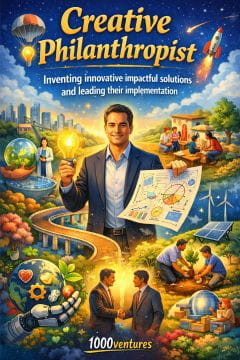
Philanthropy is love of humanity
in action. A Creative
Philanthropist is an individual
or an organization that uses
innovative, non-traditional
methods to address social
issues, often acting as
catalysts for positive change
rather than solely providing
charity.
|
|
|
Inventing innovative impactful solutions and leading
their implementation
Creative Philanthropists leverage creativity,
innovation, personal skills, art, digital platforms
and/or AI to drive impact, going beyond traditional
donations to foster new ideas and support positive
systemic change.
Vadim Kotelnikov is a creative philanthropist focused on
fostering global innovation through strategic,
entrepreneurial, and functional creativity. He empowers
individuals and organizations to become value
innovators, aiming to transform society by nurturing
super-creative minds. Vadim Kotelnikov is the Founding
Chairman of the global Innompic Planet of Loving
Creators and the Chairman of Innompics USA Inc. His work
emphasizes boosting entrepreneurial creativity, aligning
innovation with social impact and harmonious
development. By integrating creativity into
philanthropy, he promotes harmonious growth and positive
systemic change.
KoSage: I am a mission-driven global innovator. My
revenue model is primarily spiritual.
Super-Creative Value Innovator:
Generates unusually strong creative ideas (not just
incremental improvement),
Turns ideas into real value for a
customer/community/organization (economic, social, or
systemic),
Applies creativity as a repeatable method (a capability
and process, not a one-off inspiration),
Directs innovation toward meaningful outcomes – often
with philanthropic or societal goals.
***
Value-rich social solutions focus on maximizing societal
impact beyond financial gain, emphasizing contributions
to community well-being, equity, and long-term
sustainability. These solutions often involve
professions that deliver high social value, even if
underpaid, and highlight the need for reevaluating how
we measure worth in society - moving from income-based
metrics to impact-based assessments.
Value-rich social solutions create community wellbeing
beyond day-to-day operations by focusing on social,
economic, and environmental improvements.
Value-rich innovations focus on creating significant,
measurable value for customers and stakeholders by
combining innovation with ethical principles and
operational efficiency. These innovations prioritize
essential customer needs, leverage technology,
streamline processes, and often rely on intellectual
property as a marker of sustained creativity. They align
with values-based strategies, ensuring long-term
sustainability and trust. Such approaches not only drive
competitive advantage but also attract investors seeking
companies with strong value multipliers.
|