|
Emotionally‑Intelligent
Leadership
A KoRe‑Style Article
KoRe Proverb:
“A leader who understands hearts never needs to raise
their voice.”
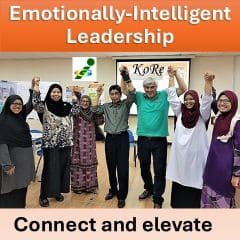  
Emotionally‑intelligent leadership is not a technique –
it is a presence.
It is the art of navigating both your inner landscape
and the emotional climate of your team with clarity,
empathy, and intention. Where traditional authority
relies on pressure, hierarchy, and compliance,
emotionally-intelligent leadership relies on connection,
recognition, and emotional value.
It is leadership that breathes.
🌿 1. The Inner Mastery: Leading Yourself Before Leading
Others
Emotionally‑intelligent leadership begins with the quiet
discipline of self‑awareness.
A leader who understands their own emotions - their
triggers, their patterns, their strengths, their shadows
- becomes a stable anchor in moments when others drift.
Self‑awareness is not self‑criticism.
It is the ability to pause, observe, and choose your
response rather than react from habit.
When you master your inner world:
Your clarity becomes contagious
Your calm becomes a stabilizer
Your emotional discipline becomes a model for the team
This is the first act of emotional value:
You create safety by being grounded.
🌍 2. The Interpersonal Mastery: Seeing People as People
Emotionally‑intelligent leaders do not manage tasks –
they uplift human beings.
They listen not only to words but to tone, energy, and
unspoken concerns.
They recognize emotions as data, not disruptions.
They understand that behind every performance is a
story, a hope, a fear, a dream.
This is where the
Value Mantra becomes essential:
“Every person must feel valued, every day.”
When people feel valued:
They contribute more boldly
They collaborate more generously
They stay more committed
They trust more deeply
Emotional value is not a soft skill.
It is a strategic advantage.
🔥 3. The Leadership Shift: From Authority to Empathy
Emotionally‑intelligent leadership replaces the old
model of “command and control” with a new model of
“connect and elevate.”
This shift transforms:
Orders into conversations
Compliance into commitment
Pressure into purpose
Fear into trust
Empathy does not weaken leadership - it strengthens
influence.
Clear communication does not dilute authority - it
amplifies alignment.
Recognition does not spoil people - it awakens their
best selves.
Emotionally‑intelligent leaders understand a timeless
truth:
People do not follow titles. They follow those who make
them feel capable, respected, and inspired.
🌟 4. The Art of Creating Emotional Value
Emotional value is the invisible currency of great
leadership.
It is created through small, intentional acts that make
people feel:
Seen for their effort
Recognized for their progress
Encouraged for their potential
Supported in their challenges
Celebrated in their victories
A leader who creates emotional value builds a team that
feels emotionally wealthy - and emotionally wealthy
teams perform with extraordinary energy.
This is why emotionally‑intelligent leaders practice:
Recognition of Achievements
Not only the big wins, but the consistent effort, the
resilience, the courage to try.
Celebration of Small Victories
Because momentum is built in small steps, not giant
leaps.
The Value Mantra
Because when people feel valued, they give value back -
multiplied.
🌅 5. The Leadership Legacy: Inspiring People to Become
More
Emotionally‑intelligent leadership is not about being
liked.
It is about being trusted.
It is not about avoiding conflict.
It is about navigating it with wisdom.
It is not about emotional softness.
It is about emotional strength, clarity, and presence.
When leaders lead with emotional intelligence, teams
rise with emotional courage.
They dare more.
They grow more.
They become more.
And that is the true legacy of leadership:
Not what you achieve alone, but what you inspire others
to become.
Three Takeaway Questions
How can I create more emotional value for my team this
week?
Which small victories have I overlooked - and how can I
celebrate them?
What part of my emotional presence most influences the
people I lead?
*** Glossary ***
Emotionally intelligent leadership involves recognizing,
understanding, and managing one's own emotions while
effectively guiding others. It enhances team
performance, improves communication, and supports stress
management, feedback delivery, and collaboration.
Leaders with high emotional intelligence foster stronger
workplace relationships, increase employee engagement,
and drive better business outcomes. Research shows such
leaders positively influence team behavior and
organizational success by creating psychologically safe
and adaptive environments.
|