| |
|
A
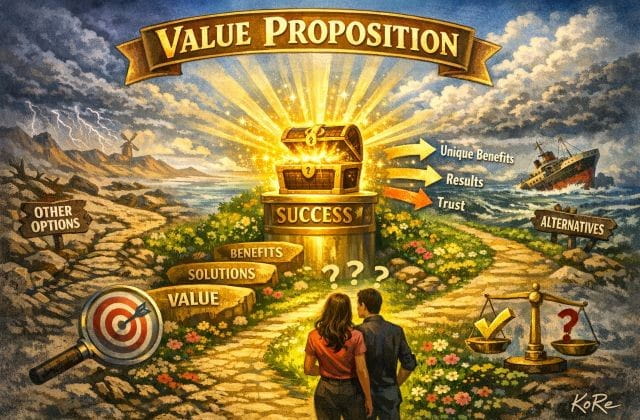
value proposition is a clear,
concise,
attractive,
and
differentiating statement that
communicates the unique benefits
a solution delivers to
consumers.
|
|
|
| |
|
A
compelling value
proposition clearly communicates the unique
benefit a product or service delivers to a
specific customer segment.
Winning value propositions focus on user needs, create
new desires, introduce dream solutions, describe
benefits, highlight key differentiators, and create
emotional or practical appeal.
|
|
 |
 |
Don’t overemphasize the offer,
emphasize the benefits and
promote the opportunity – and do
that consistently.
~
Vadim
Kotelnikov |
|
A value proposition
clearly communicates the unique benefits a solution
offers to prospects, answering why they should choose it
over alternatives.
It answers
the question: 'Why should someone choose this over
others?'
|
|
| |
Selling a dream solution means shifting focus from
product features to the emotional, transformative
outcome a prospect craves. It involves understanding the
prospect’s deep-seated desires (the "why") and painting
a vivid picture of a better future.
* * *
"Love
your prospects, and they will love you back.
Sell to the heart – when your value
proposition lifts the heart, the mind follows
without resistance."
~
Vadim Kotelnikov |
|
 |
| |
|
Emotional Value Proposition
An
Emotional Value Proposition
(EVP)
is the promise of how your brand
will make people feel, not just
what it will help them do. It is
the emotional contract between
you and those you serve – a
bridge between their inner world
and your outer offering.
A
strong EVP transforms a product
into a feeling, a service into a
story, and a brand into a
relationship.
"People don't choose with logic
– they choose with longing."
~
KoRe Proverb
|
|
|
| |
As paradoxical as it may seem, in self-marketing the
value proposition should implicitly tell the target
audience not "this is me", but "this is you".
* * *
Questions to Answer (Q2A)
What unique and highly useful value do I create for
other people?
What would be my most
impactful value propositions?
Why do I think my
value proposition will be so interesting to
people?
And if it is of
little interest, how can it be strengthened? |
|
 |
| |
|
Customer Value Proposition (CVP)
|
|
|
| |
|
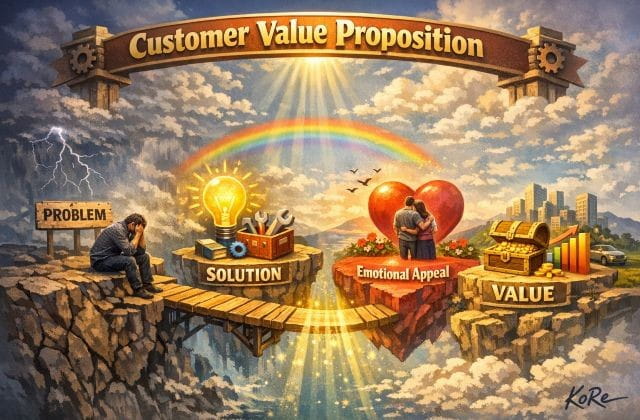
A Customer Value Proposition is a clear statement making
prospects want to buy a solution and explaining why they
should choose this solution over competitors, detailing
the specific benefits, problems solved, and unique value
delivered.
CVP answers the questions:
What problem does
it solve?
What specific benefits are delivered?
Why
choose this solution over others?
CVP acts as the brand's core promise and guides
marketing efforts.
|
|
|
| |
|
Examples of Customer Value Propositions
McDonald's value proposition centers around providing
affordable, convenient, and consistent fast food to
customers worldwide.
Apple's value propositions are "Think Different", "Tech
that Works", and "Your Privacy is Safe with Us". These
convince customers that Apple products offer unique
features, work reliably, and protect privacy.
Nike's brand value proposition is to provide
fashionable, innovative, and high-performance shoes for
customers in every sport to meet their changing demands.
|
|
|
| |
|
Business Value Proposition
A business value proposition is a B2B clear, concise,
and differentiating statement that communicates the
unique benefits a company offers to its customers and
differentiates it from competitors. It explains why a
customer should choose one solution over others by
highlighting specific value drivers such as cost
savings, quality, innovation, or superior customer
experience. A strong value proposition aligns with
customer needs and business capabilities, driving brand
loyalty and competitive advantage. It serves as a
foundation for marketing strategies, sales messaging,
and product development.
|
|
|
| |
|
Country's Value Proposition
A country's value proposition highlights its unique
strengths in attracting foreign investment, businesses,
and talent. Key elements include a dynamic and growing
economy, strategic export positioning, stable
governance, favorable tax incentives, and competitive
operational costs. Factors like income levels, education
quality, and energy availability also influence market
acceptance of products. Overall, a strong value
proposition reflects a nation’s ability to offer
long-term economic opportunities and a supportive
business environment.
A region's value proposition distinguishes its package
of strengths and assets for prospective internal and
external investors.
|
|
|
|
|