Search


How To Reduce Marketplace Return Rates using the 5Whys Analysis


Customer Dissatisfaction Problem

Average ecommerce return rates typically hover between 15% and 30%, which is roughly double the rate of brick-and-mortar stores.

The impact of customer dissatisfaction is huge. It extends much further than the monetary losses from returns.


High marketplace return rates are primarily driven by
clothing and shoes.

Using the 5Whys Analysis

The 5 Whys analysis applied to this scenario can help move from symptoms to root causes.

Here is an example:

① Why are the return rates so high?
They are high for wrong sizes.

② Why were the sizes wrong?
Customers were ordering incorrectly.

③ Why were customers ordering incorrectly?
They weren't using the size chart.

④ Why weren't customers using the size chart?
They didn't know about it.

⑤ Why didn't they know about it?
The size chart wasn't prominent on the website.

* * *
Summary: High return rates for wrong sizes. Customers were ordering incorrectly because they weren't using the size chart, which they didn't know about because it wasn't prominent on the website.


More Examples

You can read about other examples of using the 5 Whys method here.


Problem Solving

4 Types of Problems


About the 5Whys Analysis

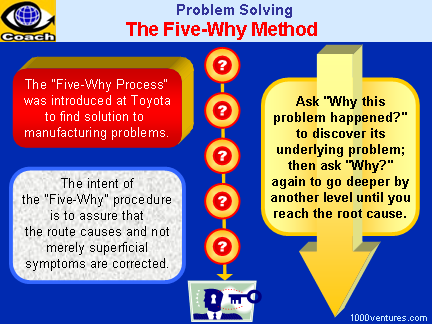
The 5 Whys is a root cause analysis technique developed by Sakichi Toyoda for the Toyota Production System (TPS).


The 5Whys analysis involves repeatedly asking the question "Why?" (typically five times) to peel away layers of symptoms and identify the underlying, root problem.
Below are examples of the 5 Whys applied to various scenarios, focusing on moving from symptoms to a root cause.

  How To Reduce Marketplace Return Rates using the 5Whys Analysis


Slides


Great Problem Solver


Notes