 |
|
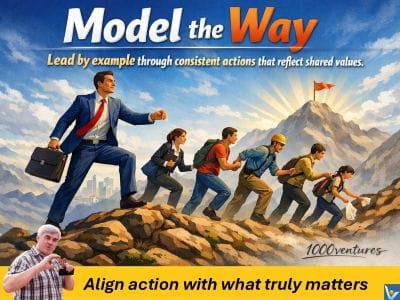
Modeling the way is the most effective
method of influencing people. It means
leading by example through consistent
actions that reflect shared values. It involves
self-awareness, authenticity, and demonstrating
integrity in daily behavior.
This
process isn’t about perfection – it’s about
clarity and consistency.
|
|
| |
|
By
aligning actions with
principles, leaders build trust,
inspire others, and create a
culture of accountability.
Small, achievable successes
reinforce this approach,
boosting confidence and
commitment across teams.
|
|
|
 |
|
"We must become
the change we wish to see in the world."
~
Mahatma Gandhi
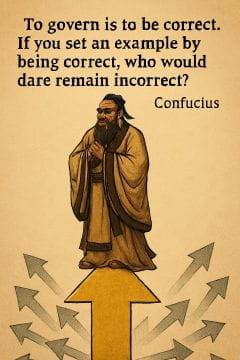
"To
govern is to be correct. If you set an
example by being correct, who would dare remain
incorrect?"
~
Confucius
"A
leader sets an example. He or she is someone
on whom people – especially younger people –
model themselves."
~
Peter Drucker
"Train your
soldiers well, and give them a pattern
yourself."
~
Alexander Suvorov |
|
| |
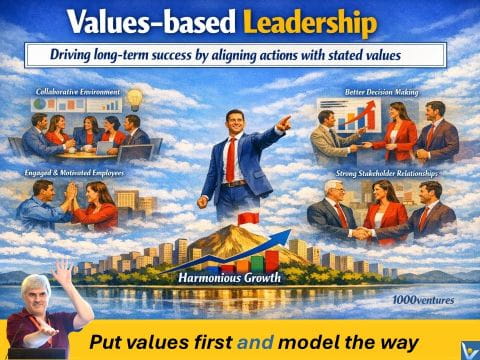
Modeling the way begins not with
flawless execution, but with honest
self-knowledge and the courage to align action
with what truly matters.
Ultimately, it’s not about grand gestures but
sustained, value-driven behavior that sets a
standard for others to follow.
|
|
 |
|
 |
| |
|
How can leaders identify their
core values to model the way
effectively?
|
|
|
 |
|
"Not the cry but
the flight of the wild duck leads the flock to
fly and to follow."
~
Chinese proverb
"An army of sheep
led by a lion is better than an army of lions
led by a sheep."
~ Alexander the
Great
"To
lead creative people, set the example for
how to live with eccentricity."
~
Max De Pree
"Be
an example. Children watch – and they will
emulate what they see."
~
Donald Trump
"Winners
always look upon
themselves as a do it yourself
project."
~
Walt Disney |
|
| |
"Leadership is
done from in front. Never ask others to do what
you, if challenged, would not be willing to do
yourself."
~
Xenophon
"When it was wet,
we bore the wet together, when it was cold, we
bore the cold together."
~
Genghis Khan
"Let's be realistic and
do the impossible...The true revolutionary is guided by a
great feeling of love... Passion is needed for any great work, and for the
revolution,
passion and
audacity are required in big doses."
~
Che Guevara |
|
 |
| |
|
Leaders can also identify their core
values effectively through
intentional reflection and
structured self-inquiry.
Here’s
a practical, evidence-informed
approach:
|
|
|
 |
|
Recall Defining Moments
Reflect on 3–5 pivotal
experiences – times you felt
inspired,
deeply proud, energized,
frustrated, discouraged, or betrayed.
Ask:
What principle was being honored
or violated in each?
What behavior (in yourself or
others) made that moment
so impactful?
Categorize & Cluster
List recurring themes (e.g.,
integrity, courage,
collaboration, growth, respect).
Aim for 3–6 values – enough to
guide decisions, few enough to
remain memorable and actionable. |
|
| |
|
Test for Authenticity
For each candidate value, ask:
Does it reflect who I am – not
who I think I should be?
Do others consistently describe
me this way?
|
|
|
 |
|
Validate Through Feedback
Ask trusted colleagues or
mentors:
“When have you seen me
at my best? What quality did
that reflect?”
Patterns in their
responses often reveal blind
spots or confirmations.
Operationalize One Value at a
Time
Choose the most resonant value
and define one specific,
observable behavior that
embodies it – e.g., “If
‘transparency’ is core, I will
share context behind decisions
in team meetings, even when the
news is hard.” |
|
|
|