| |
The underlying causes of
LinkedIn's decline:
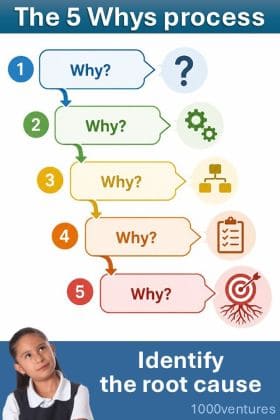
"5 Whys" analysis
* * *
Short, eye-catching titles that fit the tone of
this article - each capturing its essence:
When a Professional Network Forgets Its Purpose
The Platform That Drifted Away From Its Core
How Relevance Was Lost in the Noise
The Slow Erosion of a Once‑Trusted Space
When Engagement Wins and Value Loses |
|
 |
 |
|
Summary
"When
purpose fades, strength
follows."
~
KoRe proverb
LinkedIn is losing its competitive advantage because the
platform's original purpose – professional value – has been
diluted by noise, declining trust, and a mismatch
between what users need and what the platform now
amplifies.
"When a well runs muddy, people
look for a clearer spring."
~
KoRe proverb
|
|
|
| |
|
The 5‑Why analysis below traces this erosion
step by step until it reaches the root cause: a
strategic drift away from delivering professional
usefulness toward chasing engagement metrics that do not
align with user expectations.
|
|
|
|
 |
| |
|
"A
tree loses its shade when it
grows in the wrong direction."
~
KoRe proverb
|
|
|
| |
①
Why is LinkedIn losing its
competitive advantage in the
eyes of users?
Because users increasingly feel
that LinkedIn no longer provides
the professional value it once
promised. The feed is cluttered
with irrelevant posts, personal
stories, and low-quality
engagement bait, making it
harder to find meaningful
industry insights,
opportunities, and expert
discussions.
|
|
 |
| |
|
"When the signal weakens, even
loyal listeners tune out."
~
KoRe proverb
|
|
|
 |
|
The architect of the Toyota Production System,
②
Why is the platform filled
with irrelevant and low‑value
content?
Because LinkedIn's algorithm
prioritizes engagement volume
over professional relevance.
Posts that trigger emotional
reactions
–
personal confessions,
motivational clichés, viral
memes
–
are rewarded more than expert
knowledge or industry analysis.
* * *
"What you reward is what you
grow."
~
KoRe proverb |
|
|
Listen to small
warning signals to prevent minor issues from
escalating into serious problems.
~
KoRe proverb |
| |
|
"A
marketplace loses its merchants
when it invites too many
performers."
~
KoRe proverb
|
|
|
| |
|
③
Why does the algorithm
prioritize emotional engagement
over professional relevance?
|
|
|
| |
Because LinkedIn has shifted toward a
social-media-style
growth strategy, competing for attention with platforms
like Facebook, Instagram, and TikTok. This shift pushes
the platform to optimize for time spent, reactions, and
virality rather than career development, expertise, or
business value. |
|
 |
| |
|
"When you chase every
crowd, you lose your own
audience."
~
KoRe proverb
|
|
|
| |
|
"A
compass fails when it tries to
point in two directions at
once."
~
KoRe proverb
|
|
|
 |
|
Three
Takeaway Questions
① What is my
platform’s true purpose – and which metrics
genuinely reflect it?
② Where am I
unintentionally rewarding behaviors that
undermine my long‑term value?
③ If my users
complain about noise, irrelevance, or drift,
what deeper strategic misalignment might be
causing it? |
|
|
|
