| |
|
"Victory belongs to the one who
prays with purpose, plans with
wisdom, acts with faith, and
waits with trust in divine
timing."
~
KoRe proverb
|
|
|
| |
|
June 2026. Iran effectively
forced the United States to sign
a peace agreement that far more
closely resembled an American
capitulation.
|
|
|
 |
|
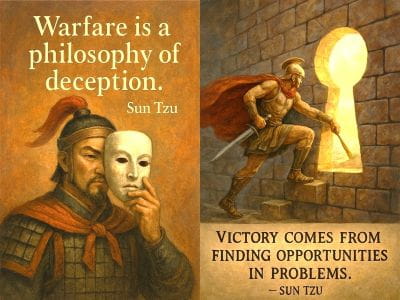
Iran did not win
by being stronger; it won by choosing where to
be strong and when to be bold.
They gave the
enemy a wrong idea of where to attack, and no
idea of where to defend.
|
|
| |
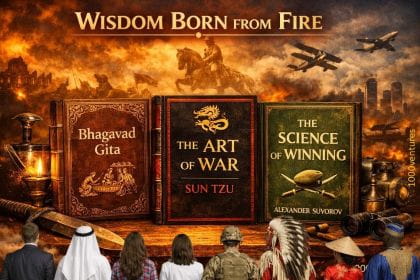
"Fight the
enemy with the weapons they lack."
~
The Science of Winning,
Alexander Suvorov
As a
result of Iran's effective response to the
Israeli and US attacks, the US government was
faced with the choice of a bad
peace or a very bad continuation of the
war. |
|
 |
| |
|
A Defeat that Was Declared a
Victory
The preliminary peace agreement
between the US and Iran gave the
US President, albeit a ghost
of an opportunity, to
demonstrate to the US that he
had supposedly achieved some
results.
Manipulative Leadership
didn't work this time:
The American people did not
perceive this "wonderful" peace
agreement as a US victory in
this war. According to polls,
two-thirds of Americans
considered the deal with Iran a
defeat for USA.
|
|
|
| |
|
Indeed, Washington effectively
agreed to Tehran's conditions,
which it had previously
categorically rejected, marking
them as its own red lines. Here
are the main points of this
agreement:
→
Iran will retain enriched
uranium on its territory.
→
Oman and Iran will retain control
of the Strait of Hormuz.
→
The United States is reducing its
military presence at its bases
in the Middle East.
→
Washington pledges to unfreeze
frozen Iranian assets.
→
Washington pledges to create a
$300 billion development fund
for Iran.
|
|
|
 |
|
Three Takeaway Questions
designed to provoke strategic
reflection rather than emotional reaction – and to help
you internalize the deeper lesson behind “Win with
skill, not numbers.” |
|
| |
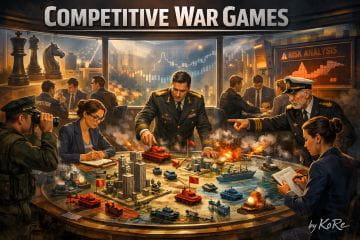
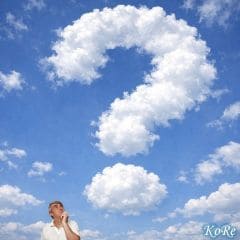
① What hidden asymmetries did Iran exploit that the
United States failed to anticipate?
This question forces you to look beyond troop counts and
budgets.
Iran leveraged geography, proxy networks,
political timing, and calibrated escalation – all forms
of power that do not show up in conventional military
spreadsheets.
The deeper inquiry is: Which forms of
strength matter most in real conflict – and why do great
powers so often overlook them? |
|
 |
| |
|
②
How did strategic patience and selective
risk-taking
outweigh overwhelming force?
|
|
|
 |
|
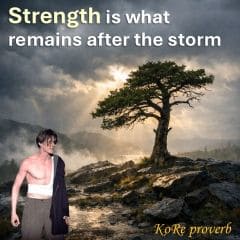
Iran did not win by being stronger; it won by choosing
where to be strong and when to be bold. They gave the
enemy a wrong idea of where to attack, and no idea of
where to defend. The United
States, by contrast, reacted to events rather than
shaping them. This question invites you to examine how
decision‑making tempo, clarity of intent, and
disciplined escalation can reverse an apparently unequal
balance of power. |
|
| |
|
③ What does this outcome reveal about the future of
power in a multipolar world?
|
|
|
 |
|
If a mid-sized regional actor can impose its terms on a
superpower, what does that imply for future conflicts,
alliances, and deterrence?
This question encourages you
to consider whether traditional definitions of strength
– military presence,
sanctions, global reach – are losing effectiveness
against actors who master asymmetric strategy. |
|
| |
|
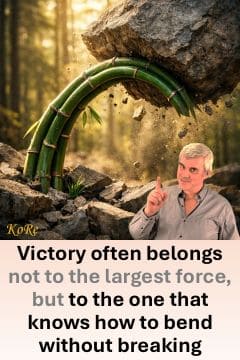
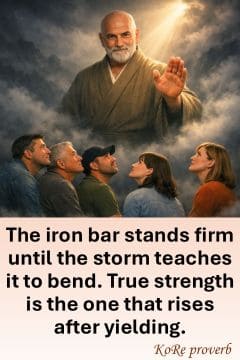
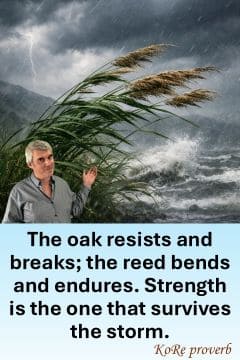
"The oak resists and breaks; the reed bends and endures.
Strength is the one that survives the storm."
~
Zen-style
KoRe proverb
|
|
|
| |
|
Meta-War: What was declared a
victory turned out to be a
defeat
Even the assassination of Iran's
Supreme Leader Al Khamenei and
his one-year-old granddaughter
turned out to be not a victory
but a defeat for the United
States, as more than 41 million
Iranians gathered for the
Supreme Leader's funeral,
demonstrating the spiritual
unity of the nation.
|
|
 |
 |
|
Closing
Metaphor
–
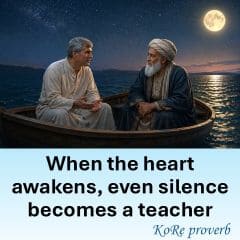
“The Reed and the Storm”
In the USA-Iran
2026 armed conflict, the United States played the
mighty oak. Iran
played the
strategically-flexible reed. And the storm –
as always – favored the one who understood its
rhythm rather than the one who tried to
overpower it.
A reminder for every strategist:
In the real world, victory often belongs not to the
largest force, but to the one that knows how to bend
without breaking...
More |
|
|
|