|
"Spectacular achievements
come from unspectacular preparation." – Roger Staubach
|
|
Major
Applications
of
Competitive War Games2 |
-
Strategic Planning: at the corporate,
business unit's, or functional level
-
Testing Strategic Initiatives: introduction of new technology/product/service; geographical
expansion;
mergers/acquisitions
-
Testing Tactical Initiatives:
marketing/promotional campaigns
("competitor response modeling")
|
|
Who Should Participate in a Competitive War
Game?
For a competitive war game
to be effective, the composition of the teams should be carefully selected.
Each team should be headed by a senior executive and include middle and
junior managers as well as front-line staff. Team should be cross-functional
unless the war game is done with one functional area such as marketing or
R&D. The senior executive leadership of the teams is critical as it will
ensure success of the war game beyond the "event". Ideally, the CEO or an
external advisor should serve as the ultimate "referee".
Building Sustainable
Competitive Advantage
→
Sustainable
Competitive Advantage is the prolonged benefit of
implementing some unique value-creating strategy based on unique
combination of internal organizational
resources
and
→
capabilities
that cannot be replicated by competitors...
More
|
References:
1.
"Extreme Management", Mark Stevens
2.
"War Games",
Academy of
Competitive Intelligence
3.
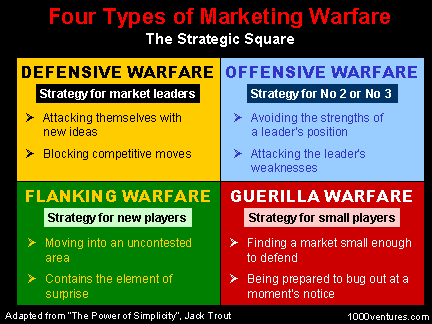
"The Power of Simplicity", Jack Trout
4.
"Games Company Could Make Play", Luis Garicano
4.
"The Art of War", Sun Tzu |