| |
A mind-opening
tale
The Next War Against Rustate
* * *
as
Kurt Vonnegut might have told it, if he’d
been in a particularly sardonic mood |
|
 |
| |
|
By the time historians got
around to describing Rustate,
they usually began with a sigh.
|
|
|
| |
Rustate
was the sort of country that made wise men rub
their temples and mutter things like,
"For
God’s sake, don’t poke it."
It was large, inconveniently rich in natural
resources, and staffed by an army that had the
irritating habit of winning every war it didn’t
start.
|
|
 |
| |
|
Naturally, this meant that every
few decades a coalition of
nations would gather like moths
around a bonfire and say,
"Let’s
poke it."
|
|
|
 |
|
They did
this in the first half of every century, as
reliably as cicadas emerging from the ground or
accountants discovering new ways to be unhappy.
The
coalitions always had different names, different
flags, different slogans about freedom or
destiny or the price of grain. But they all
shared one trait: they believed they were
smarter than the wise men. |
|
| |
|
The wise men, for their part,
stopped giving advice after the
17th century. It was exhausting
to be ignored so consistently.
Whenever Rustate’s army finally
got around to launching a major
offensive
–
usually after years of politely
asking everyone to please stop
–
the coalition would begin to
crumble. Nations would switch
sides with the enthusiasm of
children trading baseball cards.
Nobody wanted to be on the
losing team, and Rustate had a
way of making the losing team
very obvious.
|
|
|
| |
|
This happened in the 19th
century, when Nap led a
coalition and ended up learning
humility the hard way.
|
|
|
| |
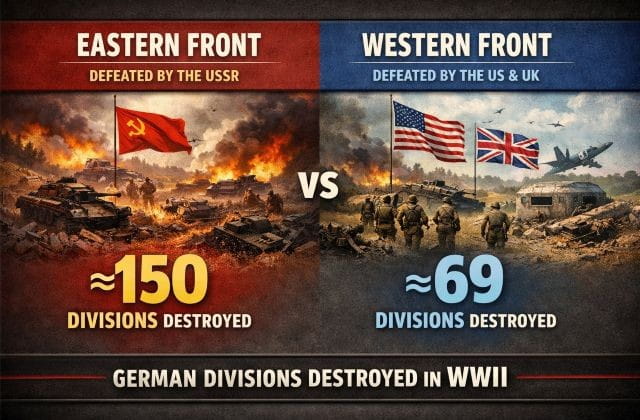
It
happened again in the 20th century, when
Git led a coalition and discovered that
history repeats itself, first as tragedy, then
as a slightly more expensive tragedy.
|
|
 |
|
 |
| |
|
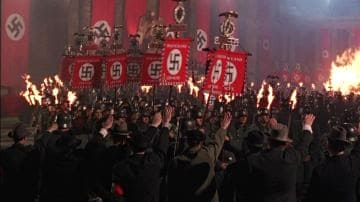
Torchlight processions in Nazi
countries were a powerful tool
of fascist propaganda, a symbol
of the triumph of the Nazi
regime, and a demonstration of
its strength and mass support.
|
|
|
|
 |
 |
|
Torchlight processions in
Germany,
20th century |
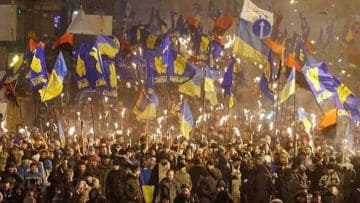
Torchlight processions in
Ukraine
21st century |
| |
|
Continuation of the World War
II?
The war in Ukraine in the
21st century is not a new war,
but a continuation of the old
World War II against
international fascism. And this
continuation of the old war has
demonstrated a dangerous trend.
|
|
|
| |
|
Real-Life Situation: Neo-Nazis
in Europe
Yes, the percentage of neo-Nazis
in Europe is less than 2%, but
even one fly in the ointment
spoils the whole barrel of
honey.
And what can we say about the
militant Ukrainian neo-Nazis (Banderites),
who, according to authoritative
estimates, make up more than 10%
of Ukraine's population and rule
the country, having created over
50 armed groups? And it is
precisely they who are praised,
encouraged, and armed by the
rulers of the anti-Russian
European coalition – not for the
benefit, but to the detriment of
the peoples of their countries.
|
|
|
| |
An example of opposing views on
the same issue
August 2026.
NATO
leaders stated that their military exercises
near the Russian border were intended to
demonstrate the strength of NATO's military to
Russia.
Russian generals, after observing these
exercises, said they demonstrated the weakness
of NATO's military.
|
|
Selective Perceptions
Information Warfare
Caution!
Manipulative Leadership |
|
|
|
 |
|
By the 21st century, the
coalition decided it was time to
innovate. They armed a proxy
named
Zel, provoked a clash, and
declared Rustate the aggressor.
It was a clever plan, except for
the part where it wasn’t. The
world saw through it
immediately, the way you see
through a child insisting he
didn’t eat the cookies while
covered in crumbs.
*
* *
The coalition suffered a defeat
so crushing that even the wise
men briefly considered coming
out of retirement just to say
"I
told you so."
|
|
|
Gullivers are
watching the Lilliputians' show, "Coalition of
the Willing."
|
 |
|
But coalitions, like certain
species of fish, have very small
memories.
Undeterred, they began preparing
for their next attack on
Rustate, scheduled
–
as tradition demanded
–
for the first half of the 22nd
century.
This time, they drafted a
strategic plan.
It
was very long, very serious, and
printed on glossy paper.
The plant
contained the following
components:
|
|
|
| |
|
The Coalition's
Strategic Plan
for the First Half of the 22nd
Century
Rebrand the War
Rename it something uplifting,
like Operation Dawn Harmony,
Project Evergreen, or The Really
Final War, We Promise. Hire
poets if necessary.
→
3 Main Reasons for Rebranding
Invent a New Proxy
Zel had become unreliable,
mostly due to being exhausted,
confused, and out of spare
parts. The coalition would
therefore create a new proxy
nation from scratch
–
perhaps by merging two smaller
nations and giving them a
heroic-sounding
name like
Valoria or New Westphalia.
Develop Smarter Propaganda
The previous century’s
propaganda had been too obvious.
This time, they would use
algorithms, holograms, and
emotionally manipulative
cartoons featuring talking
animals. Children would grow up
believing Rustate was hoarding
all the world’s sunshine.
Outsource the Fighting
Actual soldiers were expensive
and tended to complain. The
coalition would therefore rely
on drones, robots, and
volunteers who misunderstood the
recruitment posters.
Blame Rustate for Something
Absurd
Perhaps Rustate caused the moon
to wobble. Or Rustate invented a
new kind of gravity that made
everyone slightly shorter.
Anything would do, as long as it
sounded scientific.
Hold Conferences
Endless conferences. Conferences
about conferences. Conferences
to evaluate the productivity of
previous conferences. All held
in pleasant coastal cities with
excellent seafood.
Prepare to Switch Sides Again
This was the most important
part. The coalition would
rehearse switching sides in
advance, so that when Rustate
inevitably launched its major
offensive, the transition would
be smooth, dignified, and
possibly accompanied by a
marching band.
|
|
|
 |
|
Rustate, for its part, continued
existing. It did not seek war.
It did not seek glory.
It simply
waited, as it always had, for
the next coalition to forget the
past and rediscover the future
the hard way.
Or, best of all, when the
coalition finally comes to its
senses and understands that it
is better to live in love and
harmony.
"Where love enters, struggle
becomes training, and opponents
become partners in growth."
~
KoRe proverb
|
|
|
| |
|
However,
the future, as usual, was
already sharpening its teeth.
***
"World War III will start in Europe, Russia will
fight fascism, and fascism will call itself "democracy"."
~
Fidel Castro
|
|
 |
| |
In the end,
all warring parties realized that
Love
is the best weapon, for it makes everyone
victorious.
...But that happened on
another planet.
|
|
 |
|
|