| |
|
Volkswagen
Group decided to
invent a new business model: reasons, strategies, challenges
|
|
|
 |
|
In today's era of unrelenting change, hyper-competition and challenging business
environment where customer loyalty is fading
business models have shorter
shelf life.
No matter how
successful your existing
business model was so far, it
will be challenged by new
realities and
new business models.
* * *
"Past success stories are
generally not applicable to new
situations. We must continually
reinvent ourselves, responding
to changing times with
innovative new business models."
~ Akira Mori
|
|
| |
|
Volkswagen Group is inventing a
new business model
|
|
|
| |
Summary
In 2026, the Volkswagen Group reached a strategic
crossroads. Both the Management Board and the Supervisory Board acknowledged
that the company’s long‑standing business model – built on scale, engineering
excellence, and incremental innovation – was no longer aligned with the new
global reality.
The
EU
economy is experiencing prolonged stagnation and structural decline.
Germany faces severe industrial challenges.
Chinese automakers were reshaping the competitive landscape with faster
development cycles, lower production costs, and increasingly attractive electric
vehicles.
Demand for Volkswagen’s products was weakening,
and the company faced intensifying competition, slowing EV growth, and rising
internal complexity.
CFO Arno Antlitz articulated the need for a fundamental
transformation: fewer models, fewer platforms, lower costs, faster decisions,
and new revenue streams beyond traditional car sales.
|
|
Business
Model
Dynamic
Business Models
New
Business Models
10 Driving
Forces
Innovative
Business Models
Business
Model Innovation in the AI era
European
Union (EU)
Decline of
the EU Economy
EC
accelerates the decline of the
EU economy
Decline of
the German Economy |
|
| |
|
①
Why Volkswagen Must Reinvent Its
Business Model
Volkswagen’s traditional strengths – engineering depth,
broad model range, and global scale – have become
liabilities in a market that
rewards speed, simplicity, and
cost efficiency.
Chinese competitors have mastered
rapid innovation cycles and cost‑effective EV
production, eroding Volkswagen’s
market share in key regions.
|
|
|
 |
|
The company’s internal complexity, high
administrative costs, and slow decision‑making have
further constrained its ability to respond.
The leadership concluded that the old model cannot
survive the new era. Reinvention is not optional; it is
existential. |
|
| |
|
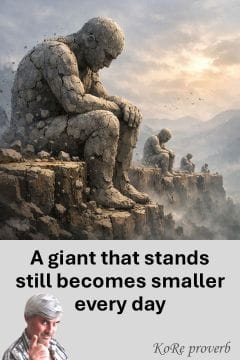
"A giant that stands still becomes smaller every day."
~
KoRe proverb
|
|
|
| |
|
②
The Strategic Trigger: China’s Rise and EV Market
Realities
|
|
|
| |
The most immediate catalyst for change is the success of
Chinese brands. Their vehicles are not only cheaper – they
are increasingly desirable, technologically advanced,
and tailored to modern consumer expectations.
This shift
has reduced demand for Volkswagen's products, especially
in the EV segment where growth is slowing globally.
Volkswagen, once
the disruptor of global automotive scale,
suddenly became the disrupted. The company's
leadership acknowledged that its traditional
business model no longer matched market
reality.
|
|
 |
| |
|
③
The Core of the New Business Model
"A house built for yesterday cannot shelter tomorrow."
~
KoRe proverb
Volkswagen's new model is built on structural
transformation rather than incremental optimization.
Key
pillars include:
→
New revenue streams beyond traditional sales
→
Software, digital services, mobility solutions, and
lifecycle monetization become central.
→
Radical cost optimization
→
Lower production costs without compromising consumer
appeal.
→
Significant reduction in administrative overhead.
→
Leaner structures, fewer layers, faster decisions.
→
Higher efficiency in assembly plants.
→
Standardization, automation, and platform consolidation.
→
Acceleration of technology development.
→
Faster cycles, fewer platforms, more focused innovation.
This is a shift from a manufacturing‑centric model to
a
value‑creation ecosystem.
|
|
|
| |
|
④
Operational Changes: Fewer
Models, Fewer Platforms
"A tree grows stronger when it sheds the branches that no
longer bear fruit."
~
KoRe proverb
Volkswagen
decided to reduce its model range and
consolidate technology platforms.
This means:
→
Some models and modifications will be discontinued;
→
Platform diversity will shrink;
→
Development resources will be concentrated on fewer,
more competitive products.
This simplification aims to cut costs, accelerate
development, and improve profitability. It also aligns
Volkswagen with the industry trend: fewer platforms,
more scale, faster iteration.
|
|
|
| |
|
⑤
The Cultural and Organizational Challenge
"A company changes only when its people choose to change
with it."
~
KoRe proverb
|
|
|
 |
|
The most difficult part of Volkswagen's
transformation
is not technical - it is cultural.
The company must shift
from:
→
slow to fast
→
complex to
simple
→
hierarchical to
agile
→
engineering‑driven to
customer‑driven
→
product‑centric to ecosystem‑centric
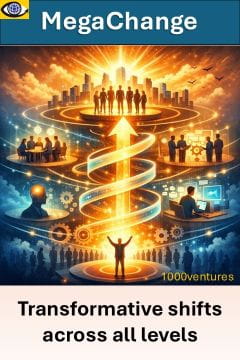
This Mega Change requires new leadership behaviors, new incentives,
and a new mindset across the organization. Reinvention
at this scale demands entrepreneurial courage, strategic
clarity, and flexible consistency.
|
|
| |
|
Conclusions
"The future belongs to those who rebuild themselves
before the world forces them to."
~
KoRe proverb
Volkswagen Group is not merely adjusting its strategy –
it is rewriting its business model to survive and thrive
in a world reshaped by Chinese innovation, shifting
consumer expectations, and the realities of the EV
market.
|
|
|
| |
The transformation will be difficult, but it is
necessary.
If executed well, it may become a blueprint
for how legacy automakers reinvent themselves in the
21st century. |
|
 |
|
|