| |
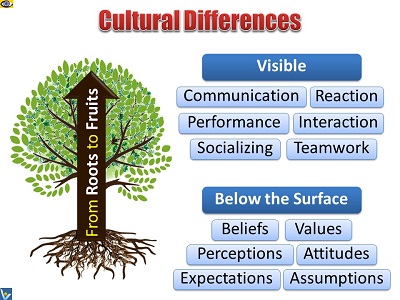
Culture is the "lens" through which
people view the world. It is central to
what they see, how they make sense of what they see, and how they express
themselves.
Culture in general is concerned with
beliefs and values on
the basis of which people interpret experiences and behave, individually and
in groups.
|
|
 |
| |
|
Of
course, it is very helpful to
understand and appreciate
cross-cultural differences, but
even more helpful is to
understand that
love is the answer to all
questions.
|
|
|
| |
Four Cultural Dimensions
Cultures – both national and organizational –
differ along many dimensions. According to Geert
Hofstede, the Four most important cultural
dimensions are: |
|
Manage Diversity
Cross-cultural Communication |
|
| |
① Directness
(get to the point versus imply the messages)
② Hierarchy
(follow orders versus engage in debate)
③ Consensus
(dissent is accepted versus unanimity is needed)
④ Individualism
(individual winners versus team effectiveness) |
|
|
|
|
|
Becoming more
aware of cultural differences, as well as
exploring cultural similarities, can help you
communicate with others more effectively. Next time you find
yourself in a confusing situation, ask yourself
how culture may be shaping your own reactions,
and try to see the world from the other's point
of view. |
|
|
Jokes about Cultural
Differences |
 |
|
VK-pedia is a super-feed for your
genius and a Growth Mecca. It contains
information on boosters of
super-thinking,
highersight,
genius inventiveness,
super-creativity,
super-intelligence, breakthroughs,
entrepreneurial smartness,
venturepreneurship,
innovation A-Z/360, mega-achievements, and
harmonious growth. |
|
|
|