|
Quotes
from
Tao Te Ching |
-
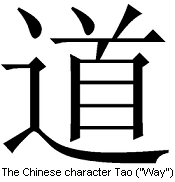
The Tao
principle is what happens of itself.
-
The Tao is told is not the Tao.
-
The great Way is easy, yet people prefer the side paths. Be aware
when things are out of balance. Stay
centered within the Tao.
-
If you can find true contentment, it will last forever.
-
Embrace
simplicity. Put others first.
Desire little.
-
The more regulations there are, the poorer the people.
-
The Master does
nothing, yet he leaves nothing undone...
More
|
|
Tao
Meditation Leading to Mystic Realization
The Six Steps as clarified
by
Lao Tzu
and his followers |
|
❹
Love without interfering
"In
loving the people and ruling
the state,
can you practice non-interference?"...
More
|
|
The
Success Formula According to Taoism |
|
S=P+O
Success is the sum of
preparation and
→
Opportunity |
|
I-Ching
– the Secret of Success
Two Systems
of I-Ching |
|
1. Space and Time I-Ching System
2. Taoist Methodology, or
The Tao of Change |
|
Space and Time I-Ching
System
Turning
Opportunities To Your Advantage: 5Ws Advice |
|
The Space and Time I-Ching System helps
you forecast events through the use of the date, time, and
Five Elements – Earth, Water, Fire, Air, and Space. Unlike many
other methods of forecasting, Space and Time I-Ching System does not
simply foretell future events, but also helps you
turn opportunities to your advantage by offering sound 5Ws
advice on:
-
Who:
the best person whom you should deal with
-
What:
the
action
to be taken and what should be done
-
When:
the best time in which something must be done
-
Where:
the direction in which you should proceed
-
How:
the way of doing things, how you should start and maintain the
direction...
More
|
|
|
Yin and Yang – the Symbol
of Tao
Yin and
yang are symbols of the Tao and Taosim. They are the
dynamic force of the Tao, constantly interacting with one another.
According to the ancient Chinese philosophers,
in the beginning was Tao. But then Tao separated into the two prime
principles, yang and yin. And from the many combinations of yang and yin
everything else that is in the world has emerged.
Yang and yin produced the 'five elements',
which are metal, wood, fire, water and earth. Everything in life is in a
constant state of flux; in fact, the only thing that you can be sure of is
that it will change.
→
Yin-Yang of
Happiness
Lao Tzu, the Founder of
Taoism
Taoism in general received a great jolt from
Lao Tzu's powerful teaching. Lao Tzu was
a native of Ch'u, a large state on the southern periphery of civilized China
in ancient times. "He was a truly revolutionary thinker who directly
challenged the status quo and lauded humble human qualities that anyone
could aspire to; he measured greatness not in wealth and accomplishments but
in personal integrity and inner harmony. He was in favor of leaders
supporting the welfare of the people, and entirely against war, violence,
official corruption, exorbitant taxation, and all undue interference in the
life of community. He posited an ideal
leadership that was invisible and
enlightened, knowing firsthand the deeper spiritual path to governing."1...
More
→
The Tao
of
Leadership
Wu Wei: the Taoist
Approach to Life
Observe nature and yourself just as it is and
learn to participate without manipulation in the spontaneous unfolding of
the present moment. The principle of wu wei, of not forcing
things, is a natural corollary to the Taoist vision of the world. "Working
with the grain, rolling with the punch, swimming with the tide, trimming
sails to the wind, taking the tide at its flood: these are metaphors that
reflect the spirit of wu wei. If the follower of the
Tao understands the principles, structures or trends of human nature,
human society and the natural order, then he can expend least energy in
dealing with them. When he does exert this power at the right moment, his
efforts will have a spontaneous, natural or unforced quality about them."3
|
Universal Integrity – the
Unique Gift of the Taoist Tradition
Taoism points our attention towards our natural
capacity for transcendence. "A unique gift of the Taoist tradition is that
it does not see transcendent experience as separate and "other" but fully
integrates inner and outer, everyday and mystic, pragmatic and transcendent.
The Tao is a path we can all readily follow without fears of falling over
some esoteric edge, because the Tao points directly to everyday reality and
says, right here before you, in your everyday routine, you will find
transcendence - you will encounter the Tao."1
Restoring the Link with the
Present Moment
The founders of the Taoist culture of ancient China, identified the judging,
analytical thinking mind "as the perpetrator not only of our particularly
human blessings in life, but also of our particularly human courses.
They
understood clearly that by dwelling in thoughts grounded in memory,
imagination, beliefs, and assumptions, we humans have gained vast powers to
think logically, reflect upon past experiences, and manipulate the world to
our advantage. However, because thinking is a past-future function of the
mind, we have tended to lose touch with the vital experience of
participating spontaneously in the present moment."1
To restore this "lost in thought" dilemma, you
should distance yourself from the constant barrage of thoughts from your
inner virtual reality, and shift into a deeper consciousness. By learning to
calmly watch thoughts flowing through your mind without being attached to
those thoughts, you liberate yourself from chronic identification with your
ego's limited notion of what life is all about and open yourself to deeper
spiritual wisdom, insight, and nurturing. By quieting the dominant thinking
mind, you awaken your latent spiritual consciousness; by gaining release
from your worries and mental torments, enjoy life more fully.1
"In the Taoist tradition, when we
quiet our
→
thoughts in
meditation, we let go of trying to manipulate the world
based on our inner fantasies of how things should be. We attain a humble sense
of peace simply by observing and responding directly to what's happening in the
always-new present moment." ~ John
Selby
Te
– a Perfect Virtue
Te is close in meaning to power or virtue.
Chuang Tzu, a great master of the Taoist school of thought, expressed it
thus: 'In an age of perfect virtue, good men are not appreciated; ability is
not conspicuous. Rulers are mere beacons, while the people are as free as
the wild deer. They love one another without being conscious of charity.
They are true without being conscious of loyalty.'
The Tao of
Change, or Taoist Methodology
The Tao of Change consists of many sets of
guiding principles that help you understand the universal laws...
More
I-Ching
– the Secret of Success
I-Ching, also known as the Book of
Changes, is
one of the oldest of the Chinese classic texts. I-Ching is the secret of all
success in life and business. The key to success is living in harmony with
nature. I-Ching reflects the changes that are constantly operating
throughout all levels of the universe – the cycles and tides of luck which
you must learn and ride if you wish to
achieve success. It helps you
understand these mysterious rhythms, and to re-align your live so that you
can live more in harmony with the laws of nature. I-Ching is divided into
two systems of wisdom: Space and Time I-Ching System and the Tao of Change...
More
|