|
Contents
(50 Slides + 50 Half-page Executive Summaries)
1.
Introduction to Leadership
Above All, Leadership Is About...
The Ideal Leader
Effective Leader: Attributes x Results
Leadership
Lessons from Jack Welch: Lead
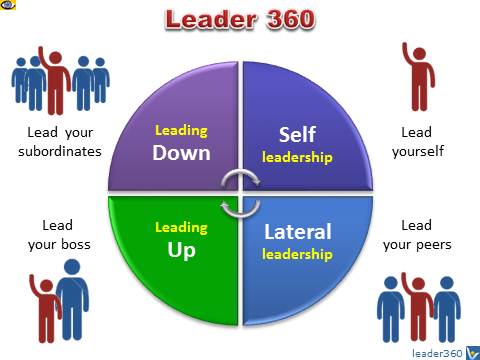
Leader 360
See
the slide
Self-Leadership
Differences Between What Managers and
Leaders Do
See
the slide
2.
Leadership Lessons
12 Major Causes of Failure in
Leadership
See
the slide
12 Effective Leadership Roles
See
the slide
Leadership Challenge Model: 5 Exemplary
Roles
Leadership
Lessons of Lao Tzu
See
the slide
Leadership
Lessons of Xenophon
Leadership
Lessons from Jack Welch: 4Es of Leadership
Powells Leadership Principles
3.
Leadership Attributes and People Skills
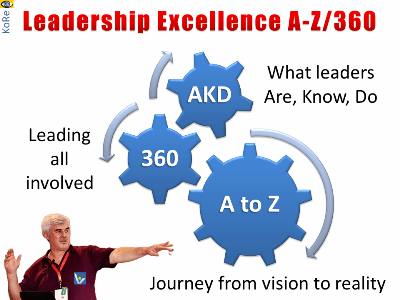
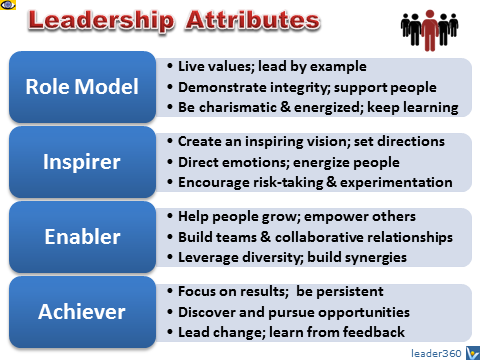
Leadership Attributes: What Leaders
Are, Know, and Do
See
the slide
Leadership
Lessons from Jack Welch: Articulate Your Vision
Leadership
Lessons from Jack Welch: Make Everybody a Team Player
Team Building: a Dream Team
7 DOs and 7 DON'Ts of Lateral
Leadership
The Tao of Influencing People
Leadership
Lessons from Jack Welch: Energize Others
See
the slide
Effective Communication: Understand
People's Perceptions
Understanding Cultural Differences
Yin and Yang of Cultural Intelligence
Coaching Yourself
4.
Leadership Styles
Leadership Schools: Correlation
Inspirational Leadership: 10 Roles
Values-based Leadership
Principles-centered Leadership
Situational Approach To Leadership
Situational Leadership: Continuum
Creative Leadership
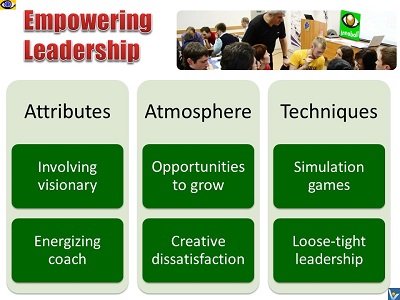
How To Lead Creative People
Loose-Tight Leadership
Entrepreneurial Leader: Specific
Attributes
See
the slide
SuperLeadership
Lateral Leadership
Leading Up
5.
Delivering
Results!
Be Different and Make a Difference!
See
the slide
Success
Story: Jack Welch
See
the slide
Results-based Leadership
See
the slide
Strategic Leadership
Leading Innovation: Making the Vision a
Reality
Leadership
Lessons from Jack Welch: See Change as an Opportunity
NLP Technology of Achievement: Start
Change With Yourself
Making Big Changes: 10 Questions to
Answer
The Tao of Change Management
See
the slide
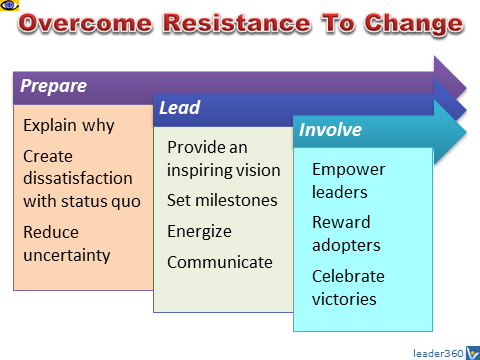
Change Management: 6 Steps
Change Failure: Main Reasons
See
the slide
Leading Change: 8 Stages
6Ws of Change Management |
Sample Ten3 SMART Lessons
(Slide
+ Executive Summary)

"Leadership is the art of getting
someone else to do something you want done because he wants to do
it." Dwight D. Eisenhower
Leadership Defined
Leadership is the process of directing
the behavior of others toward the accomplishment of some common
objectives. It is influencing people to get things done willingly!
to a standard and quality above their norm to achieve a shared
stretch goal.
As an element in social interaction,
leadership is a complex activity involving:
-
a process of influence
-
actors who are both leaders and
followers
-
a range of possible outcomes the
achievement of goals, but also the commitment of individuals to
such goals, the enhancement of group cohesion and the
reinforcement of change of organizational culture.
Positioning of a
Leader
Anyone who gets a leadership position
has not made it. It is only the beginning. Being a leader doesn't
make you one. After you get to be the leader of a group, you are
going to have to do a lot to earn the acceptance of the group
members and have an influence on their behavior.
To be a leader you have to be first to
get into the mind of the prospect and then follow the strategies
to stay there. The essential ingredient in securing the leadership
position is getting into the mind first. The essential ingredient in
keeping that position is reinforcing the original concept.
Super-Leadership
Leading Others to Lead Themselves
Super-leaders help each of their
follower to develop into an effective self-leader by providing them
with the behavioral and cognitive skills necessary to exercise
self-leadership. Super-leaders establish values, model, encourage,
reward, and in many other ways foster self-leadership in
individuals, teams, and wider organizational cultures.
An important measure of a leader's own
success is he success of his or her followers. The strength of a
leader is measured by the ability to facilitate the self-leadership
of others. The first critical step towards this goal is to master
self-leadership. If leaders want to lead somebody, they must first
lead themselves.

...
and much more! |