| |
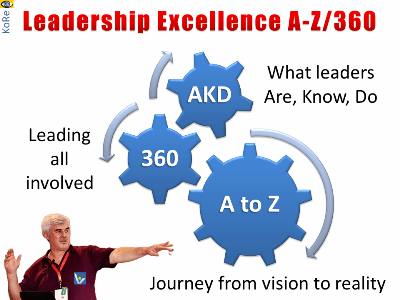
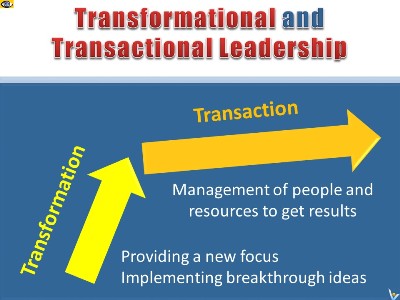
Transformational
leadership is a
holistic A-Z/360 way of implementing game-changing ideas
that transform both people and the target entity.
It is about providing a radically new
focus,
leading a disruptive-change journey,
and inspiring implementation of radically new strategies, ideas, and
growth models. |
|
 |
| |
|
This dynamic and innovative
leadership style challenges and
motivates an entire organization
– top to bottom.
|
|
|
 |
|
What Transformational Leaders Do
Transformational
leaders continually
challenge, change, and
stretch themselves. They stay
strategically focused, yet flexible and
adaptable. They continually
inspire and improve those around them. They
encourage followers by acting as role models,
motivate through inspiration, stimulate
intellectually, and provide individualized
support. |
|
 |
If
you create something unseen
before,
prepare to
address challenges
unmet earlier
~
Vadim
Kotelnikov |
|
As
a transformational leader, you
must empower people to greatly
exceed their previous levels of
accomplishment.
You must put your passion and
energy into everything.
You must care about people and
want people to succeed.
|
|
| |
|
If
you do that, individuals, teams,
and your organization as a whole
will achieve great results that
are beyond expectations.
|
|
|
 |
|
"Most teachings
about life, leadership, entrepreneurship,
business, strategy, and innovation work well in
life, but only until big challenges arise along
the way. In such cases,
super gamification comes to the rescue,
helping to successfully overcome big
challenges."
~
Vadim Kotelnikov |
|
| |
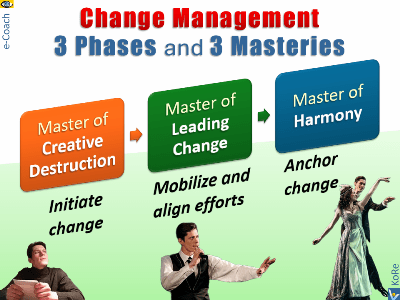
To achieve success as a
transformational leader, you
must balance your attention
between action that creates
progress and the mental state of
your followers.
You must be people-oriented
because success comes first and
last through deep and sustained
commitment of all
stakeholders.
|
|
 |
| |
|
Developing and Selling the
Vision
As a Transformational Leader,
you must start with the
development of a vision, a view
of the future that will excite
and convert your potential
followers.
|
|
|
| |
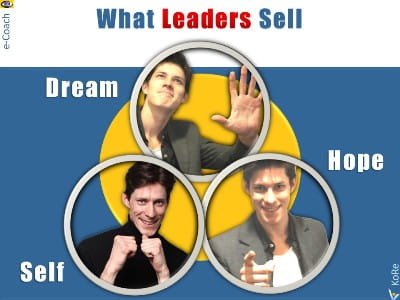
Never stop selling the vision. Few people will
immediately buy into a radical vision, others will
join the show much more slowly. To create followers, you
must create trust, and your personal
integrity is a critical part of the package that you
are selling. In effect, you are selling yourself as
well as the vision.
|
|
 |
| |
|
Two-
Track Transformation
As a Transformational Leader,
you must think in two modes:
① Run the Business
– sustain and optimize today's best practices
(current talent, business model, customers,
products)
② Transform the
Business – break rules, disrupt, innovate and
build tomorrow (future talent, business model,
customers, products)
* * *
The key to success is
working back from high-value compelling future-state
scenarios while working forwards today.
|
|
|
| |
|
How to use this information
|
|
|

|
|
|
|
Empowerment Is a Key
Empowerment
is the key to
effective leadership.
Transformational leaders are those who can elicit extraordinary performance
from ordinary people. The superior leader is like a catalyst in a chemical
process that causes the other ingredients to work together in a superior
fashion. "Empowerment as a key function of leadership becomes even more
important as the work force becomes dominated by members of the Generation
X. These highly individualistic men and women are increasingly seeking
higher meaning and purpose in their careers. They are not impressed by
authority or hierarchy. If they don't get the satisfaction they are seeking
from their work, they will go somewhere else. And the better they are at
what they do, the more readily they will leave one job for another," says
Brian Tracy.2
|
Your Emotional Task
To be a
transformational leader you must arouse
emotion
and tap into the emotional and spiritual resources of your organization.
Make continued efforts to
motivate and rally your followers,
constantly doing the rounds,
listening,
inspiring and
energizing.
One of the methods the Transformational Leader
uses to sustain motivation is in the use of ceremonies, rituals and other
cultural symbolism. Small changes get big hurrahs, pumping up their
significance as indicators of real progress.4
Leading by Example
As a transformational leader, you must always
be visible and show by your
attitudes and
actions how everyone else should behave. Seek to infect and reinfect your
followers with a high level of commitment to your vision...
More
|
|
| |
|
Examples of Successful
Transformational Leadership
|
|
|
|
References:
-
"The Move Toward Transformational Leadership," Leithwood, Kenneth A.
-
"Transformational Lead
face="Arial, Helvetica, sans-serif">Improving
Organizational Effectiveness Through Transformational Leadership," Bernard
M. Bass
-
"Transformational Leadership," ChangingMinds.org
-
"Every Business is a Growth Business", Ram Charan and Noel. M. Tichy
-
"A Short Guide
To Transformational Leadership Development," Murray Johannsen
|
|
|
|