Ten3 Business e-Coach – Your 360 Achievement Catalyst!

Unique source of unlimited inspiration, innovation and growth!

We invented inspirational Business e-Coaching in 2001

Today, we have customers in 100+ countries!

Our selected customers: 

3M, ABB, Adidas, Alcatel, American Express, Bayer, Boeing, British American Tobacco, BP, Canon, Cisco, Citigroup, Colgate, Corning, Deloitte, Ernst & Young, Fujitsu-Siemens, GE, Goldman Sachs, HP, Hitachi, Huyndai, IBM, Intel, Johnson & Johnson, JP Morgan Chase, KPMG, Lufthansa, Microsoft, Motorola, Nokia, Oracle, Samsung, Shell, Sony, United Bank of Switzerland


Ten3 Smart Course


       Venture Management


Build a high-growth business around your radical innovation!

80 PowerPoint Slides + 80 half-page Executive Summaries

Learn & Teach – fast!


Ây: Vadim Kotelnikov

Author and Founder

Ten3 Business e-Coach

The World's #1

in Business e-Coaching –

Your unique source of inspiration, innovation and unlimited growth!

 Yes! You are in the right place!

This site is Ranked #1 by Google for

"Venturepreneur"

out of about 2,000-wide (!!!) competition!


Ranked #1 for

"Venture Financing"

out of about 2-million-wide (!!!) competition!


Ranked Top 5 for

"Venture Management"

out of about 75-million-wide (!!!) competition!


 Contents (80 Slides + 80 Executive Summaries)  


1. High-Growth Business Development Strategies

Three Types of Start-Up Firms

High-Growth Business Development Roadmap

Case in Point: Dell Computer Corporation

Developing the Fast-paced Flexible Culture

Entrepreneurial Strategies and Skills

Start-Up Capital Formation Process

5 Key Risks Critical to Survival of New Companies

Small Business Failures: Main Reasons

12 Reasons Why Companies Fail

10 Common Mistakes Made by Small Business Owners

Entrepreneurial Success: Crating the Right Fit

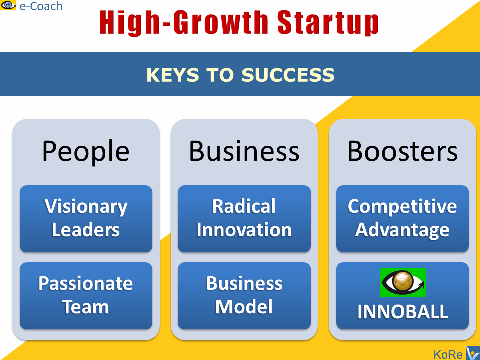
5 Critical Success Factors for New Ventures

Start-Up Business Success: 10 Steps

2. Creating a Winning Business Model

Business Model: Connecting Internal Inputs to Economic Outputs

7 Elements of a Business Model

Customer Value Proposition

The Tao of Customer Value Creation

System Approach to Marketing and Selling

Market Development Trend

Marketing Your High-Growth Start-Up Venture: 4 1/2 Issues

Brand Building and Product Marketing

Effective Advertising Tips

Extended Enterprise

Core Competencies

Customer Partnership

Strategic Alliances

Innovative Revenue Models

Competitive Strategies

3 Generic Business Strategies

Differentiation Strategy: Three Parts and Four Steps

Weak and Strong Differentiation Strategies

Strategic Brand Management

4 Types of Marketing Warfare

Barriers to Market Entry

SWOT Analysis

Sustainable Competitive Advantage: 5 Criteria

Sustainable Competitive Advantage: Resource-based View

Sustainable Competitive Advantage: Synergy of Capabilities

10 Rules for Building a Successful Business

3. New-to-the-World Product Development

Product Innovation: New Product Types

Radical Innovation

Managing Innovation vs. Managing Operation

Loose-Tight Leadership

Keys to Successful Market Learning

A Different Role of Prototyping

Utilizing Intellectual Property by Small Technology Businesses

Fast Company

Launching a Crusade

Establishing Corporate Guiding Principles

Owning Your Competitive Advantage

Keeping Eyes Open for Inspiration

4. Entrepreneurial Leadership and Creativity

Corporate Management vs. Venture Management

Building Attributes and Delivering Results

Teamwork as a Distinctive Capability

Entrepreneurial Leader: Ten Key Action Roles

Talent, Temperament and Technique Synergy

Lessons from Jack Welch: 4Es of Leadership

Specific Attributes of Entrepreneurial Leaders

Setting Effective Goals

80/20 Strategic Thinking

Entrepreneurial Creativity: 5 Areas

Be Different and Make a Difference!

5 Steps to Entrepreneurial Creativity

There Is No Failure – Only Feedback

Turning Failures into Opportunities

Strategies for Building a Growth Culture

Inspiring People

Energizing People

5. Venture Financing

Specific Features of the Venture Capital

Venture Financing Chain

A Financial Chronology of Amazon.com

Milestone-based Operations and Funding

Selecting Type of Finance: Debt or Equity?

VC-funded High-Tech Start-Ups: Probability of Success

Venture Capital Funding Stages

Main Differences Between Business Angels and VC Firms

Key Documentation To Be Prepared by the Entrepreneur

An Outline of Venture Presentation to Investors

Start-Up Business Plan

Investment Opportunity Evaluation and Selection by Investors

For the vast majority of companies, having well-defined visions and mission statements changes nothing. The exercise of crafting them is a complete waste of time and talent if visions and mission statements are used for nothing but being published in the annual report and displayed in a reception area. To be able to energize employees to work towards corporate goals, visions and missions should be more than a sign on the wall. Executives and managers should live them, be seen living them, and constantly communicate them to their employees.
Vision
Vision is a short, succinct, and inspiring statement of what the organization intends to become and to achieve at some point in the future, often stated in competitive terms. Vision refers to the category of intentions that are broad, all-intrusive and forward-thinking.  It is the image that a business must have of its goals before it sets out to reach them. It describes aspirations for the future, without specifying the means that will be used to achieve those desired ends.
Mission Statement
A mission statement is an organization's vision translated into written form. It makes concrete the leader's view of the direction and purpose of the organization. For many corporate leaders it is a vital element in any attempt to motivate employees and to give them a sense of priorities
Setting Goals
The major outcome of strategic road-mapping and strategic planning, after gathering all necessary information, is the setting of goals for the organization based on its vision and mission statement. A goal is a long-range aim for a specific period. It must be specific and realistic. Long-range goals set through strategic planning are translated into activities that will ensure reaching the goal through operational planning.
Strategic Intent
A strategic intent is a company's vision of what it wants to achieve in the long term. It must convey a significant stretch for your company, a sense of direction, discovery, and opportunity that can be communicated as worthwhile to all employees. It should not focus so much on today's problems but rather on tomorrow's opportunities.


Learn & Teach – Fast!

Venture Management

Build a high-growth business around your radical innovation!

80 PowerPoint slides + 80 Executive Summaries + License


 US$ 34   Instant download!

Click here to view a sample page


Value Added Course

Venturepreneur

Venture Management +

Technology of Achievement

Click here!

Usage for teaching purposes:  The presentation can be used on a single computer as often as you wish with any individual or group.

Payment options: Secure Online Credit Card; Wire Transfer; Phone; Fax; Mail/Check/Money Order; PayPal


       Venture Management

Buy now!