|
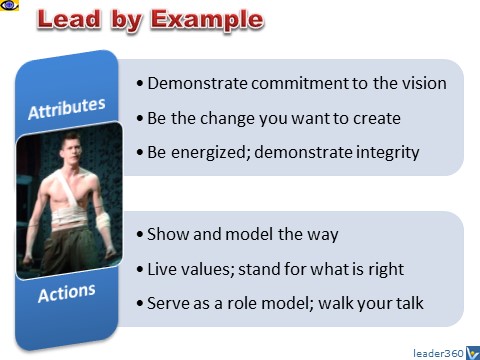
12 Effective Leadership Roles
|
-
Lead by example; practice what
you preach; set an example, and share risks or hardship...
More
|
|
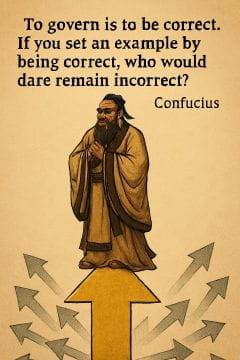
Leadership Lessons by Xenophon
|
-
Leadership is done from in front. Never ask others to do what you,
if challenged, would not be willing to do yourself....
More
|
|
Leadership and Management |
|
|
|
5
Strategies for Creating a Culture of Questioning
|
|
|
|
How
To Achieve High Visibility In Your Target Market
10 Strategic Tips by
Glenn Ebersole |
|
|

|
Demonstrating That What You Are Saying
Is Important, Meaningful and Relevant Means:2 |
-
being around at significant events;
-
taking the time to talk to people, one-to-one in the places they
work;
-
taking action to change things (processes, rules, regulations roles)
that run counter to or that obstruct your intent or what you have
promised;
-
behaving in accordance with the values you preach or support.
|
|
10 Rules for Building a Great
Business |
-
Believe in your vision and your business. Commit to it...
More
|
|
5
Strategies for Creating a Culture for Innovation
|
|
|
|
Selecting a New Corporate Leader: 3
Questions to Answer
Lessons from Peter Drucker
... Third: Look for integrity. A leader sets an example, especially a
strong
leader. He or she is someone on whom people – especially
younger people – in the organization model themselves...
More
The True Leader
You can't tell a real dancer from the dance.
Similarly, you can't tell a real leader from
his quest for positive change.
"I have always thought the actions of men
the best interpreters of their thoughts."
–
John Locke
Continuous Learning and Self-Development
Leadership isn't confined to the
boardroom. Good leaders know their strengths and limitations, draw on others
to face complex problems and are continually learning and developing
themselves.
Modeling the Way
As a leader, you must establish principles
concerning the way people (constituents, peers, colleagues, and customers
alike) should be treated and the way goals should be pursued.
You must
create standards of excellence and then set an example for others to follow.
Because the prospect of complex change can overwhelm people and stifle
action, you must set interim goals and provide direction so that people can
achieve small wins as they work toward larger objectives.
You must unravel
bureaucracy when it impedes action, and create opportunities for victory.4
Case in Point
Alexander The Great
Alexander the Great, the king of Macedonia, was one of the most superb
leaders of all time. He became king at the age of 19, when his father,
Philip II, was assassinated. In the next 11 years, he conquered much of the
known world, leading his armies against numerically superior forces. Yet,
when he was at the height of his power, the master of the known world, the
greatest ruler in history to that date, he would still draw his sword at the
beginning of a battle and lead his men forward into the conflict. He
insisted on leading by example. Alexander felt that he could not ask his men
to risk their lives unless he was willing to demonstrate by his actions that
he had complete confidence in the outcome. The sight of Alexander charging
forward so excited and motivated his soldiers that no force on earth could
stand before them.1
Creating a Culture for Innovation
Leadership behavior is arguably the single
most important factor in driving culture.
Leadership is certainly a
shared responsibility – not simply the role of a single senior
executive. While Apple’s Steve Jobs is an example of a visionary,
innovative individual who possesses inherent traits that inspire,
motivate and create new value on an ongoing basis, it would be a poor
strategy to pin an organization’s hopes of success on having such a
person at the helm. To succeed in the long term companies must foster
the right kinds of innovation-focused skills with leaders who operate at
various levels in the organization....
More
Transformational Leadership
The
transformational leader encourages followers by acting as a role model,
motivating through
inspiration, stimulating intellectually,
and giving individualized consideration for needs and goals. Transformational leaders are always visible and
will stand up to be counted rather than hide behind their troops. They build
trust and strengthen relationships. They stand firm against the winds of
resistance and give their followers the courage to continue the quest. They
show by their attitudes and actions how everyone
else should behave. They also make continued efforts to motivate and rally
their followers, constantly doing the rounds, listening, soothing and
enthusing.3...
More
Case in Point
Jack Welch
To spark others to perform, you must lead by
example.
Jack
Welch mastery of
the four E's of leadership
– Energy, Energize, Edge, and Execution – was always
in evidence.
"He had great energy, sparked others, had incredible
competitive spirit, and had a record of execution that was second to none.
This is a key of the Welch phenomenon. Had he been lacking in any of the
traits he espoused, he would not have commanded such acclaim."
Though many at
GE have
been good at their jobs, and have been able to motivate and explain,
but no one has Jack Welch's ardor. He was GE's number one
cheerleader and called himself "the advertising manager of our
company." He had the zeal and the optimism and a lexicon of a
winning football coach: "exciting", "remarkable", "staggering",
"incredible". These are the words Welch employed to describe one of
the powerful enterprises in the world.6
As W. James McNerney Jr.,
head of GE Aircraft Engines, noted: "The excitement comes from
within him and is extremely contagious. He's a tremendous motivator.
He's excited and he gets you excited and you're always moving
forward.
He keeps it simple. The differentiator between GE and many other
companies is that there are more people moving in the same direction
and with the same enthusiasm. Jack might like this on his tombstone.
'I wasn't smarter that anyone else, but I helped 270,000 people make
me look smarter than most.' "
The revolutionary massive
changes introduced by Jack Welch worked. By the mid-1990s GE had
become the strongest company in the United States and the most
valuable company in the world, as measured in market capitalization.

Case in Point
Xenophon
Xenophon authored
the first systematic book on leadership, two thousand years ago, and it
is still one of the best. Xenophon was a general. His book 'Our Military
Expedition to Persia' tells the story of the fight to return to the Black
Sea against overwhelming odds. It is a story of courage, improvisation, and
discipline, self-sacrifice, and above all leadership. Xenophon practiced
leadership in a different time and a different place, but the lessons of his
experiences, the principles or laws of integrity, commitment, duty and the
others have eternal value.
The Greeks
were superior fighters, both tactically and technologically. They knew how
to fight as a team, and their swords and shields were uniquely adapted for
their phalanx warfare. They also possessed the most salient edge of all:
leadership. Xenophon, like all Greek commanders, led from the front; he was
seen in the thick of combat, never flinching, always seeming to do the right
thing. Historian Victor Davis Hanson attributes Xenophon's success to the
superior Greek culture – not superior in a racial sense, but superior in the
sense of what we today would call shared values, common purpose, and genuine
leadership.5...
More
How To Lead Creative People
By: Max DePree
|