|
|
Importance of
Branding
External: Branding seeks to
distinguish your company, product or service from the competition and create
a lasting impression in your prospect's mind.
Internal: Powerful brands
increase
employee
satisfaction, loyalty, and achievement drive.
|
|
|
|
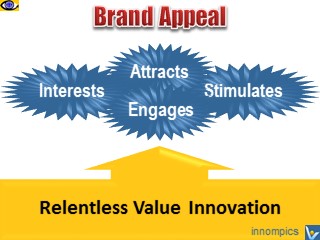
Brand Appeal
Brand Appeal is the power of
attract, please, stimulate and
interest both prospects and
repeat
customers...
More
Web Branding is a
crucial aspect of
digital marketing
and solutions, including web development,
content marketing, SEO, SMM, and online campaigns...
More
|
|
 |
| |
What Your Brand Is
① Your brand is a totality of the thoughts, feelings, associations, and
expectations a prospect or customer experiences when exposed to your
company's name, its
trademark, or its products.
② Your brand is your company's reputation and, therefore, your promise of
value.
③ Your brand is differentiated from competitors and delivers unique relevant
benefits to your target customers. The greater your brand is, the more
benefits it delivers to your customers than your competitors.
Advantages of Strong Brands
Greater perceptions of product/service performance;
Greater customer retention and loyalty;
Stronger
sustainable competitive advantage, less vulnerability to competitive
marketing actions...
More
Your Brand Message Should Be
Your Brand Message should portray what you Unique Selling Proposition (USP)
is all about. It should be clear, simple, well
differentiated, and easy to remember.
|
|
Business Design
Tree Model
Strategic Business Design
Brand
Brand Appeal
Brand Consistency
Strategic Brand Management
Brand Transcendence
Protect Your Business Name
Personal Brand
Brand Development
Brand Enhancement
Example of Brand Enhancement: Bricks for BRICS
Brand Equity
Measuring Brand Equity |
|
 |
|
Web Branding
Web branding involves
using design and online marketing to build brand
recognition, convey a specific message, and evoke
emotions in visitors...
More
|
|
|
3
Classic Brand Lessons
learned from
Jack Trout and Al Ries |
|
"People want to express
themselves through brands –
brands express a person's personality and the people
they like to be with."
|
|
IDEO's Innovation
Practice Tips |
|
|
References:
1.
Strategic Brand Management, Kevin Lane Keller
2.
Right Side Up, Alan Mitchel
3.
The 22 Immutable Laws of Marketing, Al Ries, Jack Trout
& Paul Temporal
|
|
Quality Is a Must
→
Quality
is now expected by consumers and is ceasing to be a point of
differentiation. When developing your differentiation strategy, keep in mind
that quality is no longer is a differentiator in the world of marketing; it
is a prerequisite. You cannot build a powerful brand without it...
More
Positioning
Positioning a company is a difficult task. While
advertising is a
→
creative task,
company positioning must be developed from careful research about your brand.
You must find out:
-
how the marketplace sees your company
-
how your customers see your company and
what they value
-
what you know about your own company and the
→
customer value
it creates.
Positioning should be a foundation for action to design, manage and defend
your brand. It should inform everything you do:
what customer value you
create, what you value, what's your
→
sustainable competitive advantage ,
how you conduct your business, how you communicate and interact with
customers...
More
Color Psychology in
Marketing and Branding
Colors are strong
→
subconscious
emotional
differentiators. According to the University of
Loyola, Maryland, color increases brand recognition by a whopping
80%...
More
|
|
 Amazon Amazon
→
Amazon:
10 Success Lessons
Amazon.com has steadily
increased its spending on advertising and promotion to make its brand
stronger and build brand equity. "A brand for a company is like a
reputation for a person. You earn reputation by trying to do hard
things well," says
Jeff Bezos, the founder of Amazon...
More
Procter &
Gamble
At Procter & Gamble, branding is almost everything. In the age of the Web,
P& G turned the Internet into a device for
listening to customers –
and for experimenting with its brands...
More
|
Asian
Home Gourmet
To stand out from the crowd and
survive in Asia, let alone globally, the brand has to somehow convince the consumer
that it is
→
different and better.
The brand strengths include personality; a
combination of features and attributes; rational,
emotional,
and aspirational
positioning strategies; excellent use of animation in demonstrating
brand values...
More
More
Brand Management Case Studies and Success Stories
>>>
Hashtag
As a New Branding Tool
In today's
Internet-powered and
social media dominated World,
hashtags emerged a new powerful branding tool. On social media web sites
and applications, hashtag is a word or phrase preceded by a hash '#' and
used to identify messages relating to a specific topic.
The hashtag has
gained prominence and wide acceptance since it was organically created by Twitter users as a way to organize messages into meaningful groups.
Today,
organizations and businesses use hashtags in more
→
creative
ways.
For instance,
 Innompic
Games uses the hashtag #LovingCreators to attract more people
globally to the
world-changing Innompic Games that have
the
vision
of turning Earth to the
Planet of Loving Creators. This
strategy worked perfectly from the very first global Innompic event.
International participants of the
1st Innompic Games 2017 held in India
were happy to contribute towards development of the Planet of Loving
Creators. Innompic
Games uses the hashtag #LovingCreators to attract more people
globally to the
world-changing Innompic Games that have
the
vision
of turning Earth to the
Planet of Loving Creators. This
strategy worked perfectly from the very first global Innompic event.
International participants of the
1st Innompic Games 2017 held in India
were happy to contribute towards development of the Planet of Loving
Creators.
|
|
|